

No, ambergris is an animal-derived substance and is not classed as vegan under recognised certification standards. It forms inside the sperm whale, which makes it an animal by-product regardless of how it is collected. Washed-up ambergris found on a beach differs from material taken directly from a whale, but vegan labelling schemes judge origin, not method of collection. The sections below cover certification rules, legal status and vegan-friendly alternatives.
TL;DR:
- Ambergris is an animal by-product from sperm whales, and vegan certification standards exclude all ingredients derived from animals regardless of collection method.
- Natural excretion of ambergris does not make it cruelty-free or vegan under official standards, even if found washed up on beaches.
- Trade and possession of ambergris are legally complex, with regulations varying by country and ongoing concerns about illegal and unethical harvesting.
- Synthetic alternatives like ambrox, ambroxan, and ambrofix effectively replace ambergris in perfumery, ensuring cruelty-free and legal compliance.
- Consumers should verify vegan status by checking for the Vegan Trademark or a full ingredient list, rather than relying on marketing claims or collection stories.
Table of Contents
- What ambergris is and how it forms
- How vegan certification bodies treat ambergris
- Legal and ethical considerations around ambergris trade
- Vegan-friendly alternatives perfumers use instead
- Rook Perfumes’ approach to amber without ambergris
- What vegan consumers say about ambergris
- The certification question matters more than the backstory
- Try a cruelty-free amber scent instead of chasing ambergris
- FAQ
- Sources
What ambergris is and how it forms
Ambergris is a waxy substance that develops in the intestine of the sperm whale (Physeter macrocephalus). The Natural History Museum confirms it forms as a solid mass, likely to ease the passage of indigestible material such as squid beaks, and is expelled through the digestive tract rather than vomited, despite the common myth. Only a small percentage of sperm whales produce it, which has made it one of the rarer raw materials in perfume history.
Fresh ambergris has an unpleasant smell. It only becomes prized in perfumery after months or years floating in salt water and ageing in sunlight and air, which transforms it into a soft, musky, slightly sweet material.
- It forms as a solid mass inside the whale’s gut, linked to digestion of hard prey remains.
- It is expelled naturally rather than vomited.
- Ageing in seawater and sunlight converts raw ambergris into a usable perfume ingredient.
- Traditional perfumers valued it as a fixative, a substance that makes other scents last longer on the skin.
How vegan certification bodies treat ambergris
Vegan certification does not leave room for interpretation on this point. The Vegan Trademark standards from the Vegan Society require that a certified product and every one of its ingredients involve no animal products, by-products or derivatives. Ambergris, however it is sourced, is a by-product of a living animal, so it fails that test outright.
This is where a common assumption breaks down. Some people reason that ambergris found washed up on a shore has caused no direct harm, so it should count as cruelty-free or even vegan. Certification bodies do not work that way. The standard looks at what the ingredient is, not how humanely or incidentally it was obtained.
The Vegan Trademark standard draws its line at ingredient origin, not collection method. This single criterion means a perfume could use ambergris gathered entirely from beachcombing, with no whale ever touched, and still be refused certification because the substance originated in an animal’s body.
- A product is assessed on whether animal-derived material appears anywhere in the formula.
- Beach-found, “accidental” or waste-origin animal substances are still animal substances under these rules.
- A fragrance containing natural ambergris is highly unlikely to carry the Vegan Trademark or an equivalent mark.
Legal and ethical considerations around ambergris trade
The legal picture is more tangled than the ethical one. Sperm whales are protected under international conservation agreements, but ambergris itself occupies a grey area. A CITES resolution states that urine, faeces and ambergris that has been naturally excreted count as waste products, meaning they fall outside the Convention’s controls in some contexts.
That does not mean trade is free of restriction everywhere. Gov explains that import and export rules, along with a personal effects derogation, still apply depending on the specimen and the country involved, and national enforcement can vary from the international baseline.
- Naturally excreted ambergris may be treated as waste under some CITES resolutions.
- UK import or export of ambergris can still depend on permits and the personal effects derogation.
- Enforcement priorities differ by country, which creates practical uncertainty for buyers and sellers.
- Scarcity has historically encouraged illegal or unethical collection, feeding conservation concerns even where the material itself is legally classed as waste.
Vegan-friendly alternatives perfumers use instead
Perfumery solved this problem decades ago through chemistry, not substitution with another animal product. The most common replacements are synthetic amber compounds that recreate the warm, musky depth of ambergris without any animal input.
- Ambrox reproduces ambergris’s dry, woody-amber facet and is widely used as a fixative.
- Ambroxan offers a similar effect with strong staying power, often forming the backbone of modern “amber” accords.
- Ambrofix is a refined variant used for a smoother, less sharp amber note.
Perfumers favour these synthetics for reasons beyond ethics. They deliver consistent batches, avoid the sourcing and regulatory complications tied to rare animal material, and sidestep the legal grey area around CITES and ambergris waste rules entirely. Our guide to fragrance regulation covers why certain natural ingredients face restriction in the first place.
If you want to check a bottle before buying, look for the Vegan Trademark on the packaging, ask the brand for a full ingredient list, and read the product page closely rather than assuming “natural” means animal-free.
Pro Tip: Search the ingredient list for “ambrox”, “ambroxan” or “amber accord” rather than just “amber”, since the word alone does not confirm the source.
Rook Perfumes’ approach to amber without ambergris
The brand builds every fragrance without ambergris or any other animal-derived ingredient. Amber-toned scents rely on synthetic fixatives and resin accords to achieve a warm, lingering base note and are paired with a commitment to cruelty-free, unisex formulations.
Vegan does not have to mean a compromise on depth or longevity in a scent. The right synthetic fixative can replicate the effect ambergris once had, without associated sourcing concerns.
What vegan consumers say about ambergris
Opinion within vegan communities is fairly consistent, though the reasoning varies. Most vegans reject ambergris outright because it is, by definition, derived from an animal, regardless of whether it washed ashore naturally or was collected after a whale’s death. For strict vegans, the principle of avoiding animal exploitation and by-products applies to origin, not intent or harm caused.
A smaller group argues that beachcombed ambergris causes no suffering and should be treated differently from, say, musk taken from a living animal. This view tends to surface in discussions about the ethics of “found” animal materials generally, similar to debates around shed snake skin or naturally moulted feathers. Certification bodies have not adopted this distinction, and most vegan consumers follow the certification line rather than making a personal exception.
The practical upshot for shoppers is that labels matter more than backstory. A fragrance house can describe its ambergris as ethically sourced or beach-found, and that may be true, but it still will not carry a vegan mark. Vegan buyers generally treat the Vegan Trademark, or a brand’s explicit ingredient disclosure, as the deciding factor rather than relying on marketing language about how the material was collected.

The certification question matters more than the backstory
The most useful thing this topic teaches is that “cruelty-free” and “vegan” are not interchangeable, even though shoppers often use them as if they were. Ambergris could, in theory, be collected without harming a single whale, yet it still fails every recognised vegan standard because the standards are built around ingredient origin, not the collector’s intentions or methods.

Conventional advice tends to stop at “check if it’s natural or synthetic,” which is a reasonable start but misses the real test: whether the brand can show certification or a transparent ingredient list. A fragrance house that volunteers this information tends to be more trustworthy than one relying on vague, feel-good language about sourcing.
If you are shopping as a vegan, prioritise the label over the story. Look for the Vegan Trademark first, read the ingredient list second, and treat any brand that cannot answer a direct question about animal-derived materials with caution.
— Rook
Try a cruelty-free amber scent instead of chasing ambergris
If you want that warm, musky amber character without the sourcing questions, start with our Amber Eau de Parfum, built on a smoky saffron accord rather than any animal-derived fixative. It delivers the depth ambergris is known for, formulated entirely without animal ingredients, in line with Rook’s unisex, cruelty-free approach.
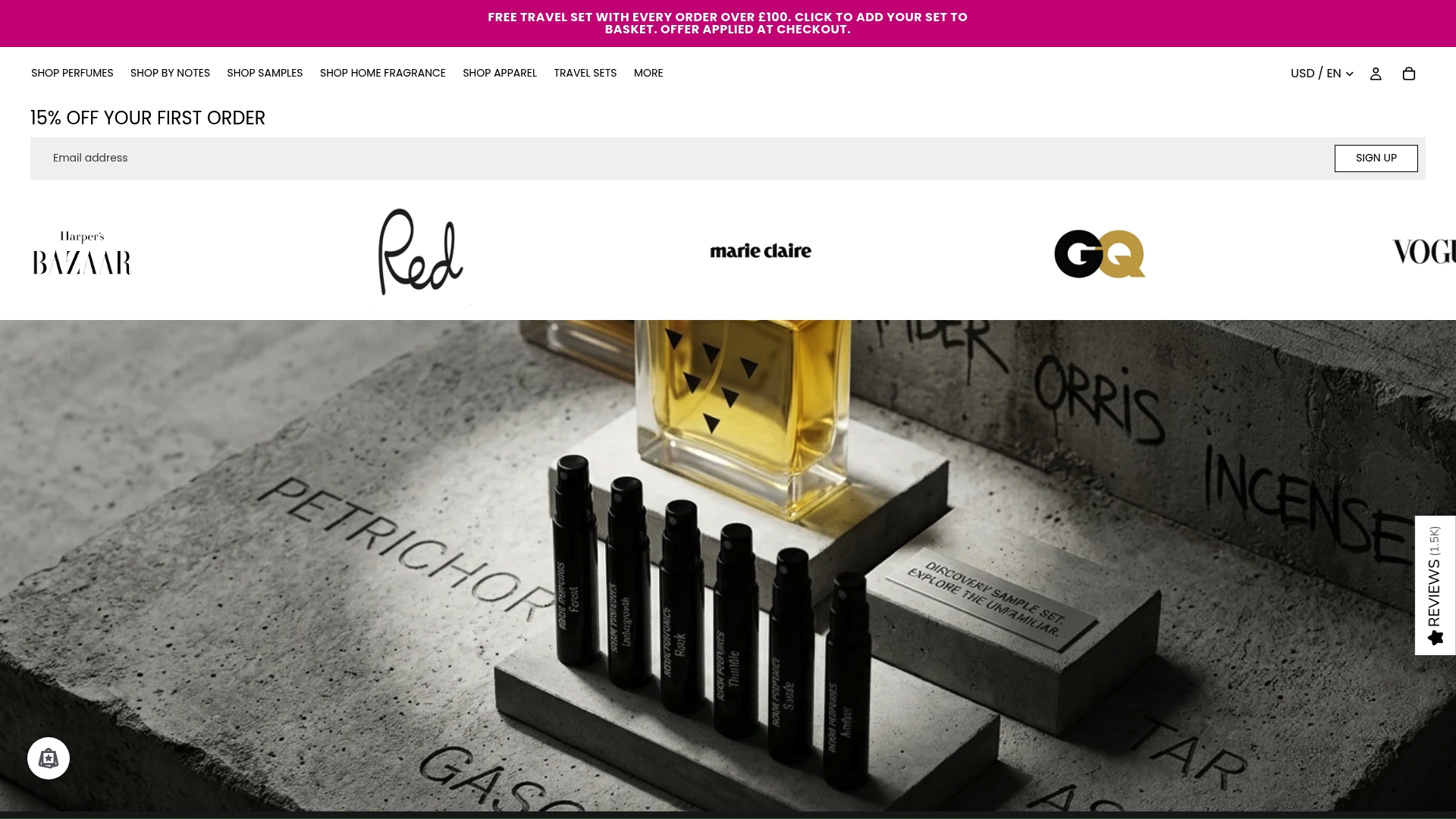
Not sure where to start? Our discovery sample sets let you try several scents, including amber-forward options, before committing to a full bottle. For a different olfactory direction entirely, our Forest Eau de Parfum, Misk Eau de Parfum and Thurible Eau de Parfum each explore woodland, patchouli-musk and incense themes, all cruelty-free from the outset. If you would rather browse everything we offer, our full perfume collection is the best starting point, and vegan fragrance options are also available through So…? Fragrance if you want to compare further afield.
- Check for the Vegan Trademark or a clear ingredient list before buying any “amber” fragrance.
- Sample before committing, since scent perception varies from person to person.
- Contact customer service directly if an ingredient list is not published on the product page.
| Product | Best for | Ethical status | Why used |
|---|---|---|---|
| Amber Eau de Parfum | Readers wanting an amber scent without ambergris | Cruelty-free, no animal ingredients | Smoky saffron accord replaces ambergris’s warmth |
| Discovery sample sets | Readers unsure which scent suits them | Cruelty-free across all included scents | Lets you test amber and non-amber profiles before buying |
FAQ
Is it legal to keep ambergris if you find it?
It depends on where you are and how the specimen is classified. CITES resolution text treats naturally excreted ambergris as waste in some contexts, but GOV.UK guidance notes that import, export and possession rules can still apply depending on the situation, so checking current guidance before collecting or trading it is worthwhile.
Why is toilet paper not vegan?
Some toilet paper is tested on animals or processed using animal-derived substances such as certain bleaching agents, which excludes it from vegan certification. The issue is unrelated to ambergris but follows the same certification logic: an ingredient or process involving animals rules a product out, regardless of the final product’s obvious lack of animal content.
Is ambergris only from sperm whales?
Ambergris is specifically associated with the sperm whale (Physeter macrocephalus), according to the Natural History Museum. It is not known to form in other whale species in the same way.
What does vegan ambergris smell like?
There is no such thing as vegan ambergris, since the material is by definition animal-derived. What people usually mean is a synthetic amber accord, built from compounds such as ambrox or ambroxan, which recreates ambergris’s warm, musky, slightly sweet character without any animal input.
Is ambergris sustainable to harvest?
Ambergris is naturally rare, found in only a small proportion of sperm whales according to the Natural History Museum, which limits supply regardless of collection method. That scarcity, combined with the legal grey areas around trade, has historically created incentives for illegal or unethical collection, which is one reason many perfumers have shifted to synthetic alternatives.
Sources
- What is ambergris? | Natural History Museum
- The Vegan Trademark standards | The Vegan Society
- Gov
- CITES resolution on treatment of excreted material
0 comentarios