

Certain perfume notes reliably shift mood: citrus lifts energy, lavender calms, peppermint sharpens focus, and warm musks steady confidence. Scent reaches the brain through the olfactory bulb, which sits next to the limbic system, the region that governs emotion and memory. The practical next step is simple. Test a note on your own skin, or order a discovery set, before committing to a full bottle.
TL;DR:
- Testing a scent on your skin for at least 24 hours provides a more accurate understanding of how it affects your mood than initial impressions.
- Citrus and peppermint notes work best for quick, situational boosts, while lavender and warm musks are better suited for calming or all-day confidence.
- Fragrance choice should consider personal memory and cultural background to ensure the scent genuinely enhances your emotional state.
- Layering scents with top notes first and base notes later, along with proper timing, optimizes mood effects during different parts of the day.
- Using discovery sets and patch testing helps personalize mood scents, especially for sensitive skin or specific emotional needs.
Table of Contents
- Which perfume notes actually change your mood
- The science: how scent reaches mood centres and what studies show
- How to choose and test a mood perfume on your skin
- Layering and timing: building a mood routine through the day
- Safety and sensitivity when wearing mood perfumes
- Personalising mood scents to your own preferences and background
- Matching mood scents to your style and the occasion
- Rook’s approach: crafting perfumes with mood and ethics in mind
- Try a discovery set before you commit to a bottle
- Sources
Which perfume notes actually change your mood
Fragrance houses have spent years mapping which notes correspond to which emotional states, and the pattern holds up across independent commentary from perfumers as well as industry research. Perfumers point to citrus and fresh green notes as the most reliable route to feeling brighter and more alert, while lavender and sandalwood get recommended again and again for winding down. Here’s how the main note families break down by the feeling they tend to produce.
Uplift and energy. Bergamot, lemon, grapefruit, and neroli work well in the morning or during a commute, when you want a scent that reads as bright rather than heavy. A citrus top note fades within an hour or two, so it suits situations where you want a quick lift rather than an all-day statement. Rook’s Jaffa Eau de Parfum leans into radiant orange blossom for exactly this kind of morning wear.
Calm and relaxation. Lavender, sandalwood, vanilla, and chamomile suit evenings, wind-down routines, or anywhere you want the nervous system to settle rather than spike. These notes tend to develop slowly and sit close to the skin, which makes them better suited to bedtime than to a boardroom.
Focus and clarity. Peppermint, rosemary, and pine work best in short, situational bursts rather than as an all-day wear. A dab on the wrist before a study session or a difficult call gives a sharp, temporary lift in alertness without lingering into the evening.
Comfort and confidence. Soft musks, creamy woods, and warm spices suit all-day wear because they carry low sillage, meaning they project gently rather than filling a room. Rook’s earthy, grounding option here is the Undergrowth Eau de Parfum, built around petrichor and greenery for a settled, steady feeling through the day.
Editorial pieces on functional fragrance also track seasonal mood-boosting blends, which tend to combine two or three of these families rather than relying on a single note.
Pro Tip: Keep a rollerball of a citrus or peppermint blend in your bag for a midday reset. A thirty-second application on the inside of the wrist works faster than a coffee break.
The science: how scent reaches mood centres and what studies show
Smell works differently from every other sense. Odour molecules bind to receptors in the nose, which send signals straight to the olfactory bulb, and from there directly into the limbic system, the brain’s emotional and memory hub. No other sense has that shortcut, which is part of why a single note can trigger a feeling before you consciously register what you’re smelling.
Electroencephalography (EEG) research backs this up with measurable data. Studies tracking brainwave activity during fragrance exposure show shifts in alpha, beta, and theta bands depending on which scent participants inhaled, alongside changes in heart rate and skin conductance. Lavender in particular shows up across multiple trials with sedative, anxiety-reducing effects, while rosemary tends to push activity toward alertness rather than calm.
The physiological signal is real but individual: two people exposed to the same lavender oil can show different EEG patterns depending on prior associations with that scent.
Consumer behaviour reflects this shift toward treating fragrance as more than decoration. Nearly half of customers, 46%, now classify perfume as a self-treat purchase tied to daily emotional wellbeing rather than pure vanity. Large fragrance houses have responded by building mood-mapping programmes using fMRI and EEG data to formulate blends aimed at specific emotional targets, an approach Givaudan’s MoodScentz research has documented at scale. None of this guarantees identical results for every nose. Memory and personal history shape how a scent lands, which is exactly why testing matters more than trusting a label.
How to choose and test a mood perfume on your skin
A perfume never smells the same on paper as it does on skin, because body chemistry changes how top, heart, and base notes unfold over several hours. Testing properly means giving a scent room to develop rather than judging it in the first thirty seconds.
- Apply to skin, not just air. Spritz a pulse point (wrist or inner elbow) rather than spraying into the air and walking through it.
- Wear one scent per day. Layering multiple unknown fragrances in the same 24 hours makes it impossible to tell which one produced which reaction, so a one-scent-per-day rule keeps the data clean.
- Track three checkpoints. Note your immediate reaction on application, how you feel at the 30 to 90 minute mark once the heart notes settle, and what you remember about it 24 hours later.
- Patch test first. Apply a small amount to the inner forearm and wait 24 to 48 hours before wearing a new scent more widely, particularly if you have sensitive skin or a history of fragrance allergies.
A discovery sample set makes this whole process cheaper and less wasteful, since you’re not committing to a full bottle before you know how a scent actually behaves on you.
Pro Tip: If a scent still feels wrong to you after 24 hours, trust that reaction. The memory association it triggers matters more than how technically well-blended it is.
Layering and timing: building a mood routine through the day
The order you apply scent changes how it reads. A workable routine follows a simple logic: volatile top notes first, lasting base notes second.
- Apply a small amount of a citrus or peppermint roll-on to a pulse point as your “boost” layer.
- Lightly mist a lower-sillage base, such as a woody or musky scent, over clothing or hair afterwards so it anchors through the afternoon.
- Save intense, longer-lasting base notes for evenings or occasions where projection matters less.
- On public transport or in shared offices, favour rollerballs or sample vials over full sprays out of consideration for people nearby.
Safety and sensitivity when wearing mood perfumes
Fragrance sensitivity is common enough that a patch test should never be optional, especially for anyone with eczema, asthma, or a known history of skin reactions. Apply a small amount to the inner forearm and check the area at 24 and 48 hours for redness, itching, or irritation before applying a new scent more broadly.

Certain notes carry more allergy risk than others. Essential oils in the citrus family, including bergamot, can cause photosensitivity, meaning skin becomes more reactive to sunlight after application. Strong florals and some synthetic musks are common triggers for headaches or nausea in fragrance-sensitive individuals, so starting with a lighter application and building up gradually is safer than a full spray on day one.
A short safety checklist worth keeping in mind:
- Patch test any new fragrance before regular wear, particularly essential oil blends.
- Avoid direct sun exposure on skin treated with citrus-heavy scents for several hours.
- Ventilate shared spaces when using scented candles or diffusers, since airborne concentration builds differently than skin-applied perfume.
- Stop use immediately if you notice respiratory irritation, and consult a pharmacist or doctor if symptoms persist.
Pregnant readers, or those with chronic respiratory conditions, should check with a healthcare professional before introducing new essential oils or heavily concentrated fragrances into a daily routine.
Personalising mood scents to your own preferences and background
The same lavender oil that relaxes one person can leave another cold, because smell ties directly to personal memory rather than a universal chemical response. Byrdie’s perfume experts note that this individual variation is exactly why small-scale personal testing matters more than any general list of “best” mood notes, including this one.
Cultural background shapes scent preference too. Notes considered calming or comforting in one region, such as sandalwood in South Asian traditions or amber in Middle Eastern perfumery, may register as unfamiliar or even overwhelming to someone raised around lighter, cleaner Western fragrance profiles. Neither reaction is wrong. It reflects genuine differences in which scents carry positive associations for a given person.
Building a personal mood library works better than chasing whatever note is trending. Start by identifying scents from your own past that carry strong positive memories, a grandparent’s garden, a specific holiday, a childhood kitchen, and look for perfumes built around those raw materials. Discovery sets are useful here precisely because they let you sample several unrelated families side by side without financial risk, revealing which notes actually move your mood rather than which ones you’ve been told should.
Matching mood scents to your style and the occasion
A scent chosen purely for its psychological effect can still clash with how you present yourself, which undercuts the confidence it’s meant to deliver. Pairing fragrance choice with personal style tends to produce a stronger effect than treating the two as separate decisions. Someone who dresses expressively and leans into bold personal style benefits from a scent with equal presence, rather than something quiet that fights the rest of the look. Fashion psychology research on personal expression points to clothing choices reinforcing identity and self-perception, and fragrance works the same way when it’s chosen deliberately rather than by habit.
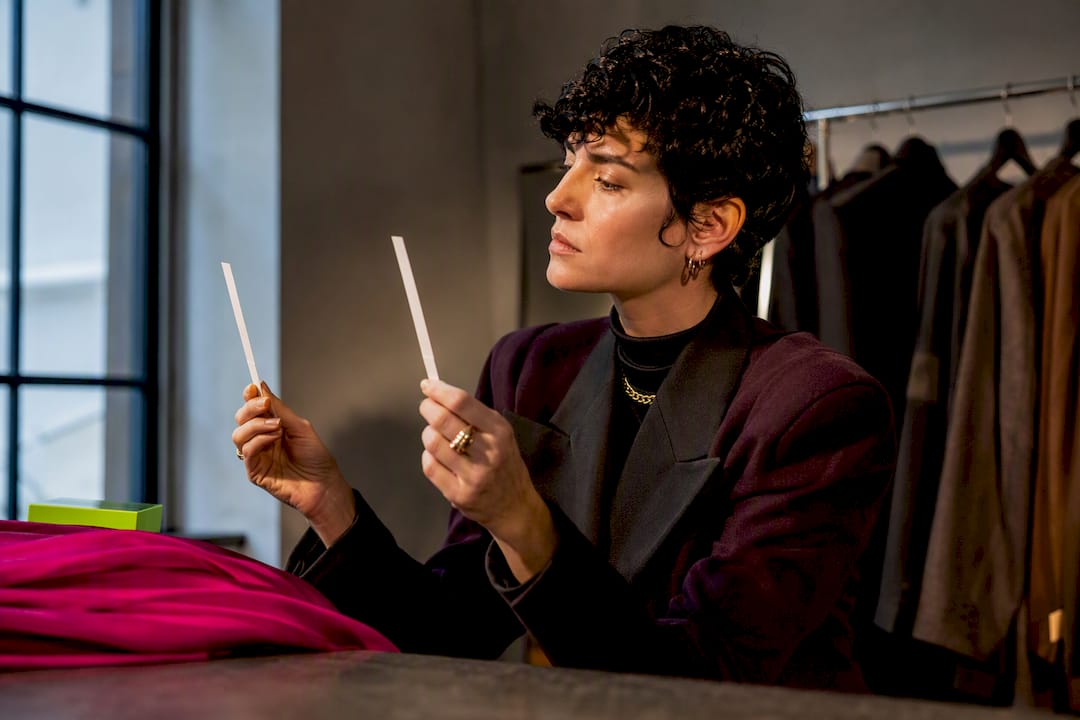
Occasion matters just as much as style. A warm, spiced comfort scent that feels perfect for a quiet Sunday can feel wrong at a client meeting, where a cleaner citrus or green note reads as more composed. Matching the note family to what you actually need from the moment, calm before a difficult conversation, sharpness before a presentation, comfort at the end of a long week, turns fragrance into a tool rather than an afterthought.
Rook’s approach: crafting perfumes with mood and ethics in mind
Rookperfumes builds unisex, cruelty-free fragrances around memory rather than trend, which sits naturally alongside mood-directed scent choices. A discovery sample set remains the most sensible first step for testing how these notes actually work on your own skin before buying a full bottle.
— Rook
Try a discovery set before you commit to a bottle
Testing notes properly, one scent per day, tracked over 24 hours, works far better with a set of samples than with a single full-price bottle bought on a guess. Rookperfumes’s fragrance discovery sample sets include a £20, £25 or £30 voucher (depending on the set) toward a future full-size purchase, so testing costs you nothing in the long run if you find a note family that fits.

If warm, comforting woods are calling after reading the comfort and confidence section, the Acresford Eau de Parfum built around smoky rose and cedar is worth adding to your set. Prefer to wear the mood on your sleeve rather than your skin? The brand’s Forest, Amber, and Undergrowth unisex t-shirts carry the same memory-inspired themes as the scents they’re named after. Start with the discovery set, note what shifts your mood across a week, then decide which bottle earns a permanent place on your shelf.
Sources
- Can perfume really boost your mood? How wellness is redefining scent
- Influence of fragrances on human psychophysiological activity with special reference to EEG
- The Best Mood-Boosting Perfumes, According to Perfume Experts
- MoodScentz™+ — Givaudan
0 comentarios