

Small batch perfumes are limited-run, perfumer-led fragrances made in small quantities rather than mass production lines, and they tend to prioritise unusual materials and originality over broad appeal. The fastest way to work out whether they suit you is not to buy a full bottle on faith, but to try a discovery set or sample vial first, testing on skin over a few days before you commit.
TL;DR:
- Small-batch perfumes are made in limited runs with distiller oversight, often using rare natural ingredients and focusing on originality over mass appeal.
- Testing samples or discovery sets on skin over several days reduces the risk of a bad purchase and ensures the scent suits your chemistry before buying full sizes.
- Regulatory rules require ingredient transparency and allergen labeling, especially for trace compounds that can trigger reactions in sensitive users.
- Prices are generally higher than mass-market fragrances due to scarcity, quality materials, and small production volumes, but value is best judged by longevity and character.
- The trend favors unisex, storytelling scents from independent brands, with buying research and proper storage being key to enjoying small-batch fragrances over time.
Table of Contents
- What does “small batch perfume” actually mean?
- Why people choose small-batch perfumes
- How to discover and try small-batch perfumes
- What to check before you buy
- A maker’s view: how small batches are made, and why formulas change
- What should small-batch perfumes cost?
- Reputable brands and artisans in small-batch perfumery
- Storage and shelf-life tips for small-batch perfumes
- A note on discovery-led buying, from Rook
- Try a Rookperfumes discovery set before you commit
- Sources
- FAQ
What does “small batch perfume” actually mean?
A small batch perfume comes from a limited production run, often overseen directly by the perfumer rather than a factory line answering to a brand committee. Where mass-market fragrances are formulated for consistency across millions of units, small-batch houses work in far smaller volumes and can afford to make bolder, more idiosyncratic decisions about what goes into the bottle.
That difference in scale shapes both the process and the result:
- Hand-blending or small-batch compounding, often done in-house rather than outsourced to a giant manufacturing facility
- Raw materials sourced from several specialist fragrance houses rather than one bulk supplier, which allows access to rarer naturals and unusual aroma chemicals
- Formulas built around a specific memory, story, or idea rather than market-tested for the widest possible appeal
- Smaller print runs, meaning a scent you love this year might not be available in exactly the same form next year
The result is fragrance that smells more particular and less “safe”. Niche perfumery exists precisely because some noses want something a department store counter will never stock.
Why people choose small-batch perfumes
Buyers gravitate towards small-batch houses for reasons that go beyond wanting to smell different from everyone else on the train.
- Ingredient quality: independent perfumers often use costlier naturals and niche aroma materials that mass producers avoid on cost grounds
- Exclusivity and storytelling: limited editions and one-off collaborations mean the scent carries a specific narrative, not a generic brand campaign
- Ethical practice: many small-batch houses formulate cruelty-free and vegan, and some extent that ethos into packaging and sourcing decisions
- Unisex formulation: without a mass-market gender split to protect, independent perfumers are freer to build scents meant for anyone
Pro Tip: Don’t take a “cruelty-free” or “vegan” label at face value. Check whether the brand states it plainly on the product page or ingredient list; a house with nothing to hide usually says so clearly, rather than hinting at it in marketing copy.
Exclusivity matters more with artisan scents than with mainstream ones, because a formula that sells out may not be remade in exactly the same way twice.
How to discover and try small-batch perfumes
Buying a full 50ml bottle of an unfamiliar artisan scent unsniffed is a gamble most people regret at least once. Discovery sets exist to remove that risk.
- Start with a discovery set. A well-built set lets you test several scents on your own skin, not just on a card, and should clearly label the concentration of each fragrance (Eau de Parfum, Parfum, or Extrait), since concentration changes how a scent develops.
- Wear each sample for a full day, ideally more than once. Skin chemistry, weather and even what you ate can shift how a fragrance reads, so one spritz in a shop is not a fair test.
- Look for a conversion offer. Some discovery sets include a voucher or credit towards a full bottle, which softens the cost of experimenting and rewards you for testing properly first.
- Try travel atomisers for scents you already suspect you’ll like. A travel-friendly 3ml format is common among UK indie houses and works well for holidays or gym bags.
- Widen the net beyond one brand. Indie boutiques, fragrance markets, and sample swaps with other enthusiasts all surface artisan scents you won’t find through algorithmic recommendations alone. A mini discovery set from any credible artisan house follows broadly the same logic: small vials, real skin testing, low financial risk.
What to check before you buy
Small-batch does not automatically mean transparent, and a compelling backstory is not the same as a verified ethical claim. A few checks separate genuine artisan quality from marketing dressed up as craft.
- Read the ingredient listing. Fragrance compositions usually appear under the collective term “parfum” or “aroma” rather than a full chemical breakdown, and that is standard practice, not a red flag on its own.
- Check for named allergens. Under EU and UK rules, individual fragrance allergens must be listed separately once their concentration exceeds 0.001% in leave-on products such as perfume, or 0.01% in rinse-off products like soap.
- Verify cruelty-free and vegan claims against the product page rather than a general “About” statement, since the two claims are not automatically the same thing.
- Look at the sample or return policy. A brand confident in its formula usually offers a low-cost way to try before you commit to a full bottle.
That 0.001% threshold exists because leave-on products sit against skin for hours, so even trace allergens can trigger a reaction in sensitive users. Regulation (EC) No 1223/2009 and its later updates require the ingredient list on packaging and name the specific allergens in Annex III that must appear individually once they cross that line. In the UK, the 2025 Cosmetic Products Regulations restate concentration limits relevant to fragrances sold domestically, so the same logic applies whether you’re buying from a UK maker or importing from abroad.
A maker’s view: how small batches are made, and why formulas change
Compounding a small-batch fragrance starts with sourcing, and sourcing is rarely tidy. Rare naturals and specialist aroma chemicals often have to be ordered in small quantities from several different fragrance houses, not one bulk supplier, which means availability can shift from one production run to the next.
A rare oud accord or an unusual natural extract might come from a single small supplier. When that supplier runs out, or an IFRA restriction changes what concentration is legally usable, the formula has to change too. That’s not a marketing decision. It’s a sourcing one.
After sourcing comes compounding and stability testing, then a small run rather than a mass production batch. This is precisely why independent perfumers discontinue or quietly tweak formulas more often than big houses do. It isn’t fickleness. It’s the practical reality of working with rare materials in small volumes. Publishing a clear account of how the process actually works and offering a sample route before a full bottle purchase both help buyers absorb that risk rather than be blindsided by it.
What should small-batch perfumes cost?
Expect to pay more per millilitre than you would for a mainstream department store fragrance, and expect that premium to be justified by material cost rather than pure brand markup. Rarer naturals, smaller production runs, and the absence of mass-manufacturing economies of scale all push the price up. A 50ml artisan Eau de Parfum will typically cost more than a comparable mass-market bottle, and an Extrait, being more concentrated, usually costs more again than the same scent as an Eau de Parfum.
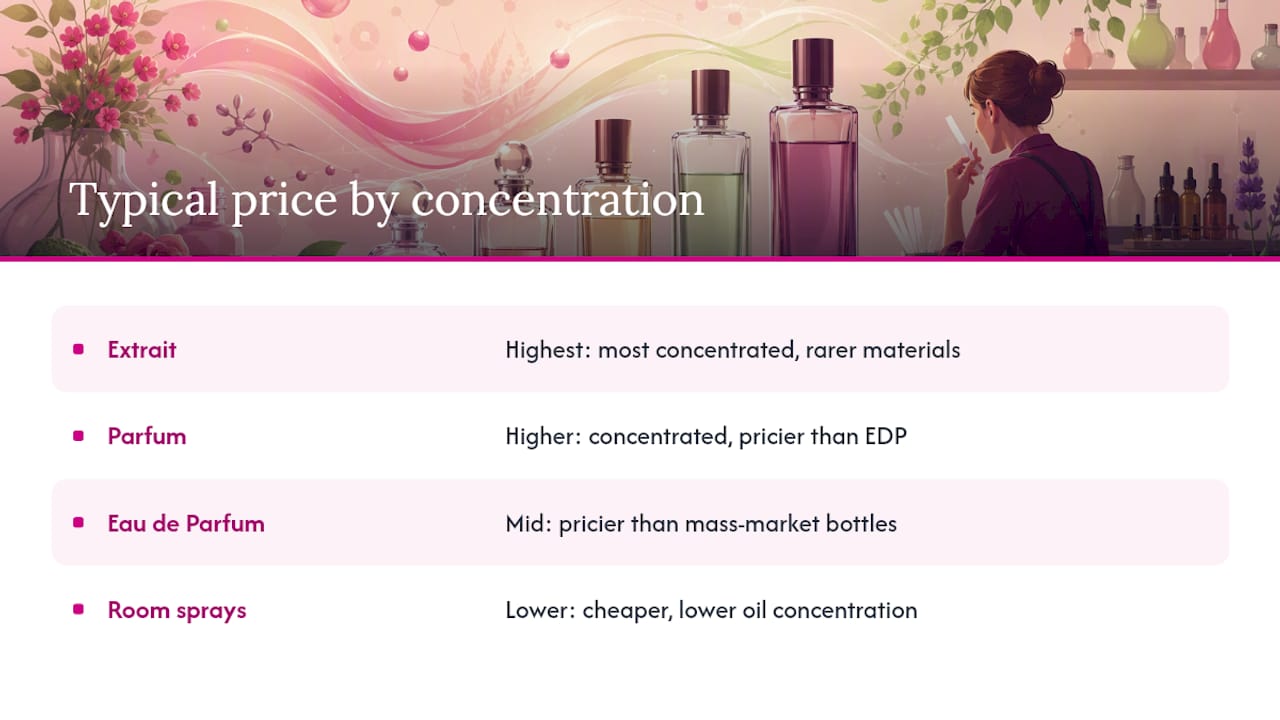
Value in this category isn’t only about price per millilitre. A £15 to £25 discovery set that lets you test six scents properly on your own skin is often better value than a £70 full bottle bought on a hunch, purely because it removes the chance of an expensive mistake. Full-bottle pricing across Eau de Parfum, Parfum, and Extrait concentrations tends to scale with both oil concentration and rarity of materials, so comparing concentration types matters as much as comparing brands. Room and ambient sprays sit at a different price point again, generally cheaper than a personal fragrance because they use a lower concentration of oil over a larger volume.
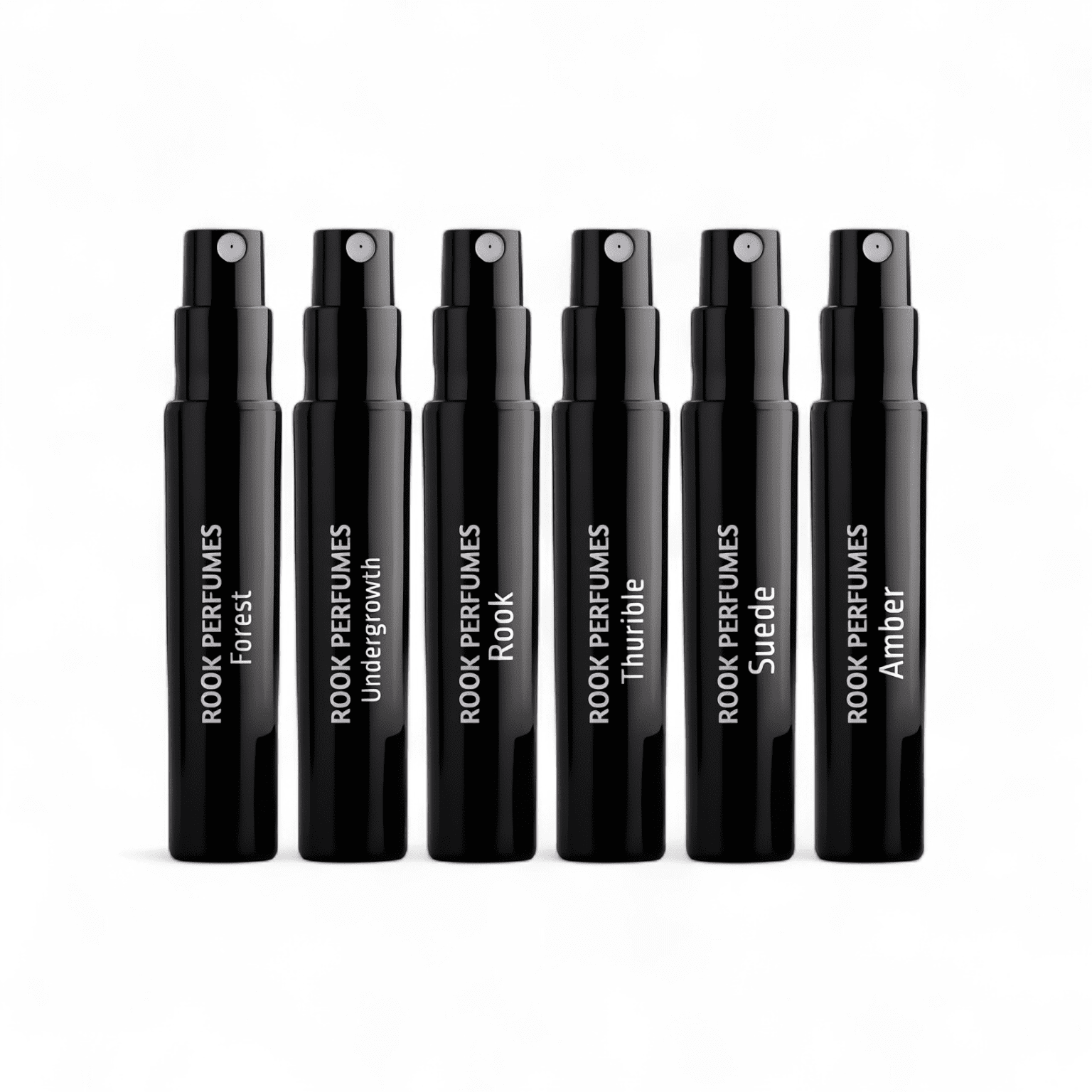
The honest way to judge value is longevity and character per wear, not sticker price alone. A scent that lasts eight hours and gets noticed is worth more than a cheaper one you have to reapply by lunchtime.
Reputable brands and artisans in small-batch perfumery
The small-batch and niche perfumery world has grown well beyond a handful of Paris ateliers. Independent British houses now sit alongside longer-established niche names, often built around a single perfumer’s vision rather than a corporate brand identity. Editorial round-ups of UK niche and indie perfume brands are a useful starting point if you want to see the breadth of what’s out there beyond the big fragrance houses.
This brand is part of the independent tradition, focusing on memory-inspired scents and unisex formulation rather than gendered marketing splits. Its Palestine Collection is a good example of how a small-batch house can use a limited-edition release to carry a specific cultural story, rather than treating a fragrance purely as a commercial product.
Researching a maker before buying is worth the ten minutes it takes. Community reference sites such as Fragrantica’s brand pages catalogue independent perfumers alongside user reviews and note breakdowns, which is a useful way to cross-check a house’s reputation before you commit to a full bottle.
Storage and shelf-life tips for small-batch perfumes
Small-batch fragrances are more sensitive to poor storage than mass-market ones, mainly because they often lean on a higher proportion of natural materials, which oxidise faster than synthetic aroma chemicals.
Keep bottles away from direct sunlight and heat. A bathroom shelf under a window is the worst place to store any fragrance, artisan or otherwise, because UV light and temperature swings both degrade the oils. A drawer, cupboard, or the box the bottle came in is a far better home. Keep the cap on tightly between uses to limit oxygen contact, since oxidation is the main reason a fragrance’s top notes fade or turn slightly sour over time.
Extrait concentrations generally hold up longer than Eau de Parfum once opened, simply because they contain a higher proportion of oil to alcohol. Room and ambient sprays have a shorter practical shelf life once opened, since they’re usually used more liberally and exposed to air more often. If a scent you love is a limited edition, don’t assume you can restock indefinitely. Buying a spare bottle while it’s available is sensible if a formula depends on a rare material that might not be sourced again.
A note on discovery-led buying, from Rook
Rookperfumes exists partly because we believe you shouldn’t have to guess. We offer discovery sets because a rare natural material or a story-led formula deserves to be tried on real skin before real money changes hands, not judged from a product photo. Every scent we make is meant to say something, whether that’s a memory or a cause we care about, and cruelty-free, vegan formulation isn’t a marketing add-on for us. It’s the baseline. If any of that sounds like your kind of fragrance, a sample is the honest way to find out.
— Rook
Try a Rookperfumes discovery set before you commit
Rookperfumes gives you a genuinely low-risk way to test memory-inspired, unisex scents before spending on a full bottle, something a single unsniffed purchase from an unfamiliar niche house can’t offer. The Fragrance Discovery Sample Sets come with a £20–£30 voucher included towards a full-bottle purchase, so testing properly on your own skin actually pays you back if you find one you love.
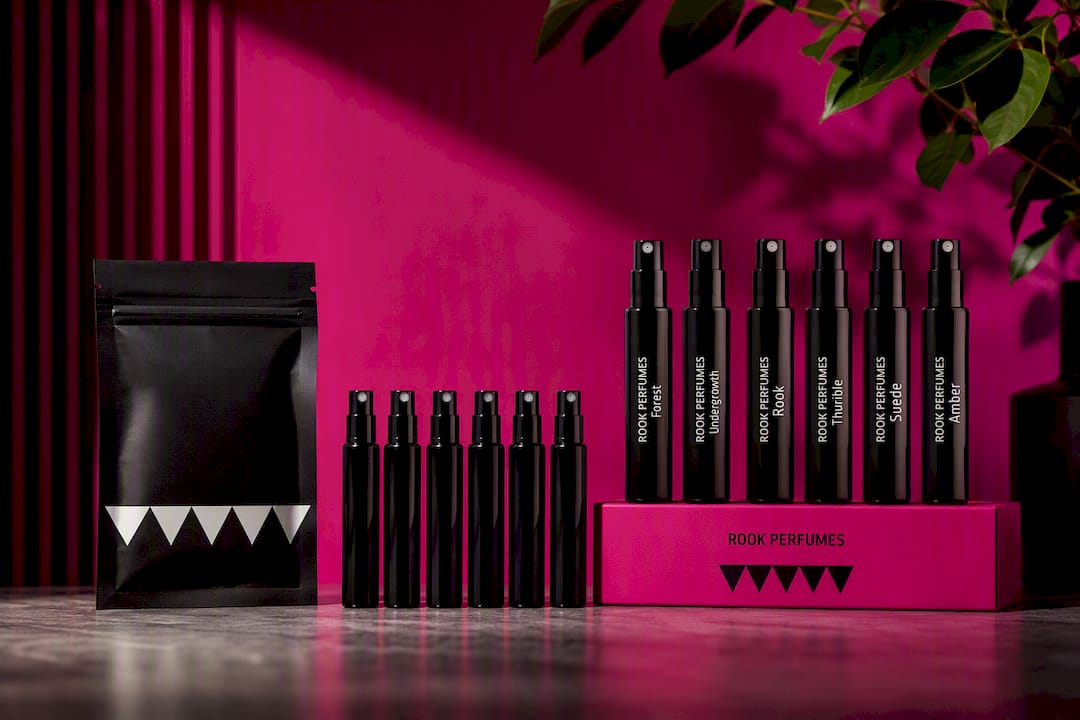
If you’d rather test at home over several days, the Discovery Set Sampler covers a spread of our scents in one go. Prefer something you can carry with you? The travel sets of 6 x 3ml atomisers fit a coat pocket or hand luggage, so you’re not limited to testing at your bathroom sink. Once you’ve found the one that fits, browse the full Eau de Parfum, Parfum, and Extrait range and pick your concentration. Start with a discovery set, wear it for a few days, and let your own skin make the decision.
Sources
- Fragrance allergens labelling — single market economy (EU resource)
- Regulation 2023/1545 — Eur-Lex (fragrance substances and labelling)
- Legislation
FAQ
What are some popular small-batch perfume brands?
Small-batch perfumery spans independent British houses through to longer-established niche names, often built around a single perfumer’s vision rather than a corporate identity. Rookperfumes is one example, known for memory-inspired, unisex scents and limited-edition releases such as its Palestine Collection. Editorial round-ups of UK indie perfume brands are a good place to see the wider field.
What is the best small perfume to start with?
There’s no single “best” small-batch perfume, because scent preference is genuinely personal and skin chemistry changes how a fragrance develops. The smarter starting point is a discovery set that lets you test several concentrations and profiles on your own skin, such as our Discovery Set Sampler, rather than picking one bottle based on a review alone.
Where can I buy mini perfumes or sample sets?
Independent perfume houses sell discovery and travel sets directly through their own sites, which is usually the most reliable route since it guarantees fresh stock straight from the maker. Our Fragrance Discovery Sample Sets include a £20, £25 or £30 voucher (depending on the set) towards a full bottle if you find a scent you want to keep. Indie boutiques and fragrance markets are worth checking too, particularly for brands that don’t ship samples directly.
What is the most talked-about type of perfume right now?
Rather than one specific scent, the clearest trend in fragrance is a shift towards unisex, story-led formulations and limited editions from independent perfumers, moving away from the gendered, mass-produced formulas that dominated the market for decades. Small-batch houses that lean into a specific memory, cause, or cultural narrative, rather than a generic marketing angle, are the ones generating the most genuine conversation among fragrance enthusiasts.
0 comentarios