

A perfume is sustainable when its ingredients, manufacturing and packaging measurably reduce harm, and the brand publishes lifecycle or traceability data to prove it. Three checks matter most: traceable sourcing behind the ingredients, refillable or recyclable packaging, and honest data instead of vague marketing. Rookperfumes builds its discovery sets around exactly this, giving you a low-waste way to test scents before committing to a full bottle.
TL;DR:
- Refillable packaging can reduce greenhouse gas emissions by up to 65 percent, water use by 67 percent, and energy consumption by 66 percent, depending on refill logistics.
- Using upcycled and biotech-derived ingredients, such as citrus peel waste or fermentation products, minimizes environmental harm without sacrificing scent quality.
- Transparency in sourcing, extraction methods, and life cycle data is essential, with red flags including vague claims and lack of traceability information.
- Decants and discovery sets help minimize fragrance waste by allowing testers to sample scents before committing to full bottles.
- A genuine sustainable perfume should provide accessible lifecycle assessment data, recyclable packaging with certifications, and transparent supply chain details.
Table of Contents
- Ingredients: how sourcing, green chemistry and biotech change the footprint
- Packaging and refill systems: what actually cuts the footprint
- Production and supply chain: extraction, energy and circular practices
- Certifications, labels and data: what genuinely proves sustainability
- How to choose a sustainable perfume: an 8-point checklist
- How Rookperfumes puts sustainability into practice
- Where sustainable perfumery is heading next
- Try Rookperfumes without the waste
- Sources
- FAQ
Ingredients: how sourcing, green chemistry and biotech change the footprint
Not every “natural” ingredient is kind to the planet, and not every lab-made molecule is worse than the plant it replaces. Wild-harvested botanicals can strip regional ecosystems if demand outpaces regrowth, whereas plantation-grown crops offer steadier yields but sometimes rely on heavy irrigation or pesticide use. Upcycled feedstocks sidestep both problems by turning existing waste into raw material.
Green chemistry and biotechnology are reshaping what “responsibly sourced” looks like. Fragrance houses now extract renewable, biodegradable aroma molecules from by-products such as citrus peel, rather than harvesting fresh botanical stock. One example, Lilybelle, is built from 83% renewable raw materials sourced directly from orange juice production waste.
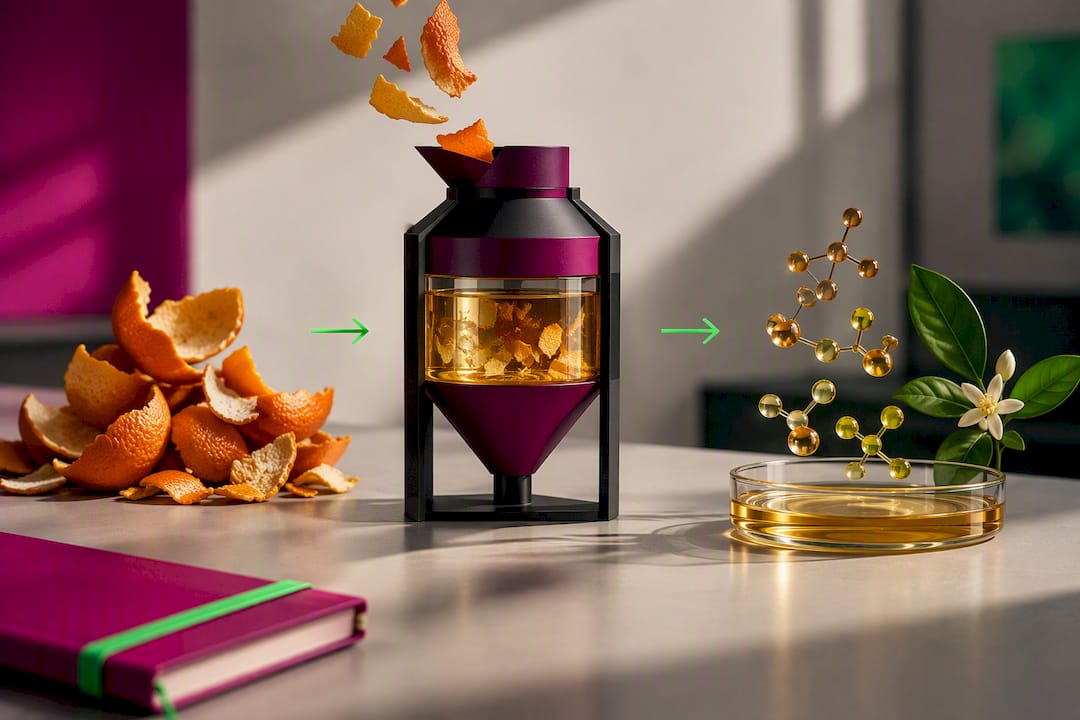
This matters because the debate has moved past “natural versus synthetic” and into something more useful: performance plus impact, where biotech ingredients replace scarce naturals without sacrificing how a scent actually smells or lasts.
When you’re checking a bottle or product page, look for:
- An INCI list you can actually read, rather than a single word like “fragrance.”
- Any mention of upcycled feedstocks, fermentation-derived molecules, or by-product sourcing.
- Supplier traceability claims that name a source, not just a country of origin.
- Certification marks like Leaping Bunny confirming no animal testing occurred anywhere in the supply chain.
Pro Tip: If a product page only says “natural ingredients” with no INCI list or sourcing detail, treat that as a red flag rather than reassurance.
Packaging and refill systems: what actually cuts the footprint
Packaging is where good intentions meet hard physics, and refill systems are winning that argument. A lifecycle assessment comparing a refillable 100ml bottle plus a 150ml refill against five traditional 50ml bottles found the refill approach cut greenhouse gas emissions by up to 65%, water use by up to 67%, energy by up to 66%, and mineral resource consumption by up to 75%.
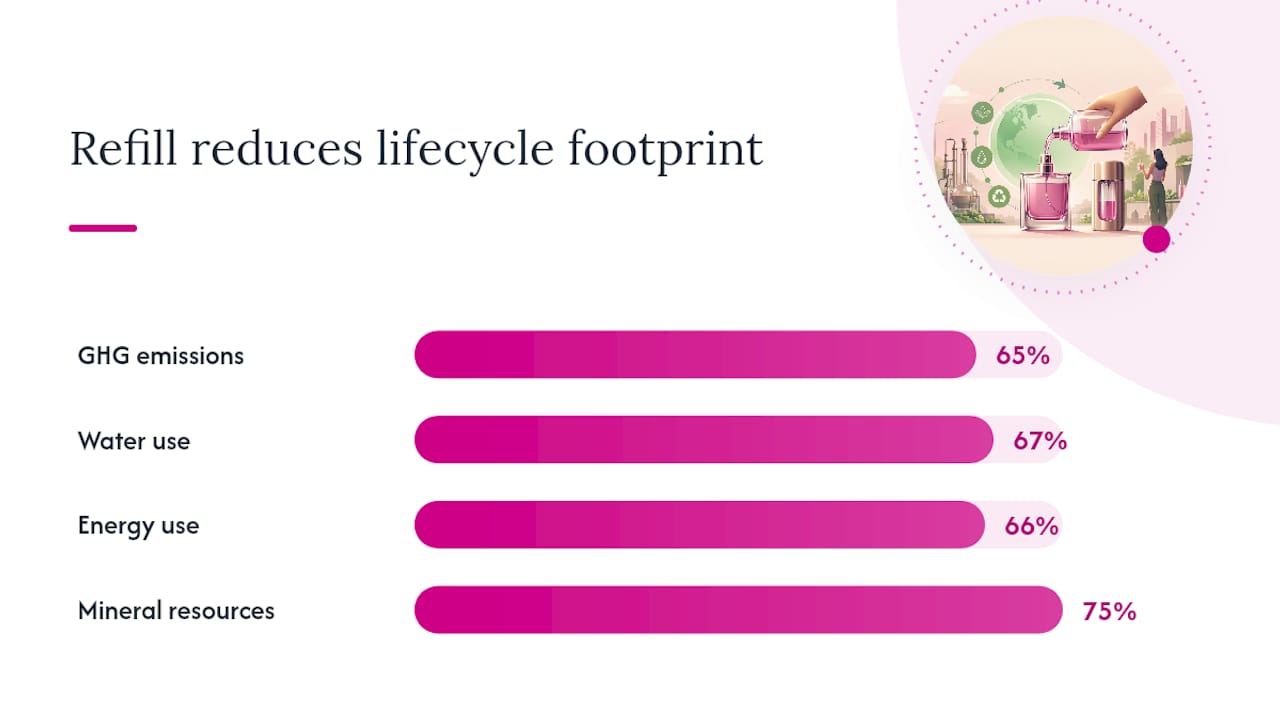
That gap exists because glass production and shipping are energy-intensive, and refilling avoids remaking the heaviest part of the product every single time. Lightweight glass and advanced polymers, including ionomer resins and bio-based grades, are also cutting transport emissions while keeping the shelf appeal buyers expect.
Refillability is no longer a niche preference either. Industry reporting shows 59% of luxury buyers now prefer refillable packaging, pushing more brands toward lighter glass and certified polymer solutions.
Before trusting a refill claim, check for:
- ISCC PLUS certification on the polymer or feedstock used.
- Explicit recycled-content percentages, not just “eco-friendly” language.
- Genuine refill availability, not a one-off limited edition.
- Stated weight reductions compared with the brand’s previous packaging.
Pro Tip: Glass production and transport energy can sometimes offset refill benefits unless refill logistics are efficient, so look for published lifecycle data rather than assuming refillable always wins.
Production and supply chain: extraction, energy and circular practices
How a scent is extracted from raw material shapes its footprint long before it reaches a bottle. Steam distillation is the traditional method, solvent extraction handles delicate materials that heat would damage, and supercritical CO₂ extraction can cut energy use and emissions compared with steam distillation for many essential oils, though it costs more to run.
Green chemistry is also changing manufacturing itself. Concentrated formulas need less carrier liquid and packaging per wear, and biotech routes, such as fermentation-produced Ambroxan, can achieve dramatically lower carbon footprints than conventional chemical synthesis for the same molecule.
Supply chains matter just as much as the chemistry. Short, transparent supply chains and supplier programmes that pair traditional cultivation with upcycling reduce pressure on scarce botanicals while improving traceability and supporting local livelihoods.
What to look for in production claims:
- Named extraction methods rather than vague “premium quality” language.
- Concentrated or Extrait formats, which typically mean less packaging waste per use.
- Supplier programme details, ideally referencing fair-trade-style or third-party audited sourcing.
Certifications, labels and data: what genuinely proves sustainability
Marketing copy is cheap; verified data is not. Lifecycle assessment (LCA) data remains the strongest evidence a brand can offer, because it lets you compare products on genuinely equal terms rather than trusting adjectives.
Trustworthy marks worth recognising include COSMOS and NATRUE for organic and natural cosmetic standards, ISCC PLUS and Cradle to Cradle for material circularity, and Leaping Bunny for cruelty-free verification across the full supply chain.
Watch for these red flags:
- Vague “natural” or “green” claims with no INCI list attached.
- No mention of sourcing, extraction method, or supplier traceability anywhere on the page.
- Complete absence of any lifecycle, carbon, or water-use data.
How to choose a sustainable perfume: an 8-point checklist
Run through these eight checks before you buy, whether you’re browsing online or standing at a counter:
- Does the brand offer a refill option for this scent?
- Is there published LCA data or an eco-score you can actually see?
- Is the INCI list transparent, with sourcing details beyond “fragrance”?
- Does the product page name its extraction method?
- Is the packaging recyclable, lightweighted, or ISCC PLUS certified?
- Does the brand mention third-party social audits or fair-trade-style sourcing?
- Can you try the scent before buying a full bottle, through decants or discovery sets?
- Will you actually finish the bottle, or is this an impulse buy you’ll abandon at 20%?
When information is missing, don’t guess. Email the brand directly, favour discovery sets over full-size gambles, and lean toward simpler formulas with fewer unnamed ingredients.
Pro Tip: Decants and discovery sets aren’t just a nice-to-have. They stop half-used bottles gathering dust in a drawer, which is one of the most overlooked forms of fragrance waste.
How Rookperfumes puts sustainability into practice
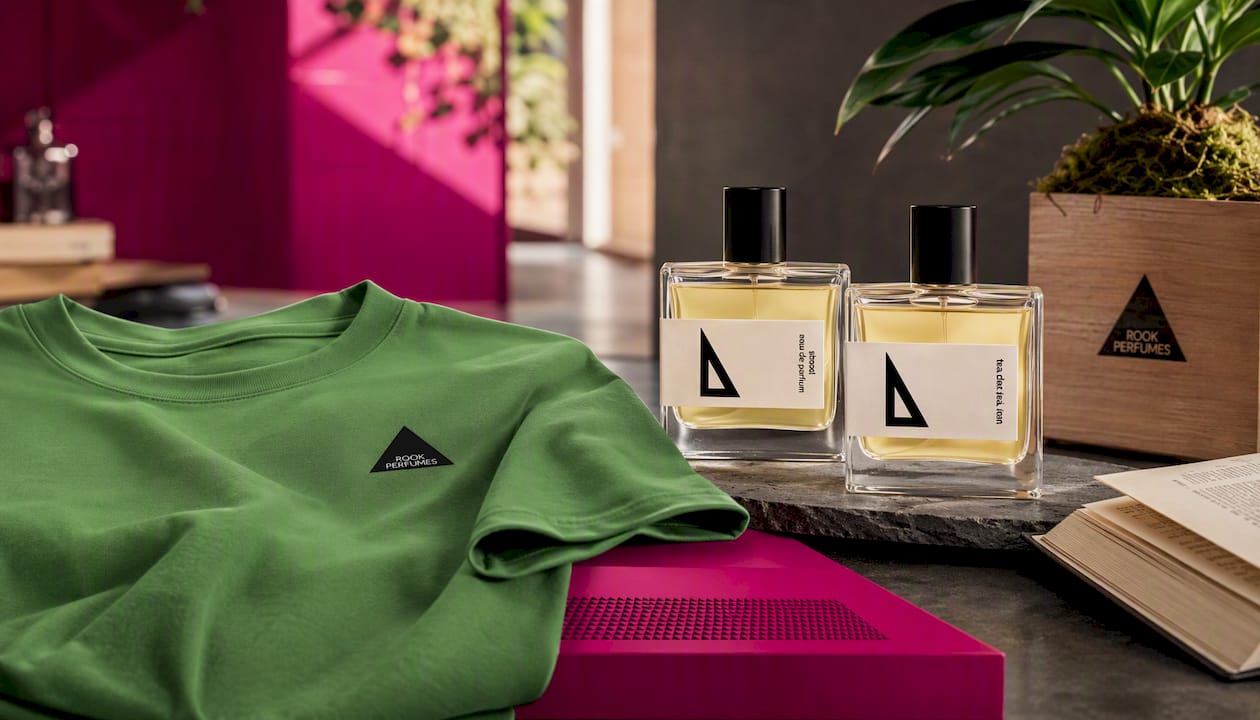
The brand offers cruelty-free, unisex formulations with a focus on small-batch storytelling rather than mass-market volume. Three products show that approach in action: the Forest Unisex t-shirt, the School Eau de Parfum built around nostalgic classroom memories, and the Tea Chest Parfum, a lapsang and rosewood woods composition.
- Cruelty-free and unisex across the entire range, not as a marketing add-on.
- Discovery sets allow customers to sample multiple scents before buying full size, reducing the risk of an unused bottle.
- Small-batch production is used to enhance the storytelling behind each fragrance.
— Rook
Where sustainable perfumery is heading next
Green chemistry and biotech will keep widening the pool of ingredients that don’t rely on scarce botanicals. Refillability and verified eco-scores are becoming baseline expectations, not premium extras. As buyers keep asking harder questions, more brands will have no choice but to publish real LCA data instead of adjectives.
Try Rookperfumes without the waste
Rookperfumes gives you a way to explore memory-driven, cruelty-free scents without buying a full bottle on a guess. That’s the practical difference here: rather than committing to 50ml of something untested, a discovery set lets you sample the story and the scent first, then decide.
Start with the full perfume collection to compare Eau de Parfum, Parfum and Extrait concentrations, or head straight to the Palestine Collection if you want a scent tied to cultural storytelling. Prefer scenting a room rather than yourself? The home fragrance range covers room and ambient sprays. Every formulation stays unisex and cruelty-free, whichever entry point you choose. Browse the collection and pick a discovery set to start.
Sources
- Coty launches the first ever refillable perfume achieving cradle-to-cradle certification
- Future-forward palette — DSM‑Firmenich
- The new face of sustainable perfume packaging — Safic-Alcan (2026)
FAQ
What are five examples of sustainability in perfume?
Refillable packaging, upcycled ingredient feedstocks, fermentation-derived aroma molecules, published LCA data, and cruelty-free certification through marks like Leaping Bunny all count as concrete sustainability measures. Together they cover ingredients, production and packaging rather than just one slice of the process.
Are celebrity perfume lines like Billie Eilish’s or Ariana Grande’s sustainable or vegan?
Celebrity fragrance lines vary widely in how much sourcing or lifecycle data they publish, and most don’t disclose ingredient-level traceability or LCA figures. Checking for a visible INCI list, cruelty-free certification, and refill options is the fastest way to judge any specific release, celebrity-backed or otherwise.
What are some genuinely eco-friendly perfume options?
Look for brands that publish LCA data, offer refillable packaging, and use upcycled or biotech-derived ingredients rather than relying on vague “clean” labelling. Rookperfumes’ unisex, cruelty-free range and discovery sets fit that description by letting you sample before committing to a full bottle.
Do vegan claims in mainstream fragrances mean the perfume is also sustainable?
No. Vegan means no animal-derived ingredients, but it says nothing about packaging, extraction methods, or carbon footprint. A fragrance can be fully vegan and still ship in single-use glass with no refill option, so the two claims need checking separately.
How much difference does refillable packaging actually make?
A meaningful one: comparing a refillable 100ml bottle plus a 150ml refill against five standard 50ml bottles showed emissions cut by up to 65% and water use by up to 67%. The saving depends on actually using the refill rather than buying a fresh bottle each time.
0 kommenttia