

Perfume concentration is the percentage of aromatic oils dissolved in alcohol and water. Parfum, or extrait, sits at the top with a high percentage of oil for long, close signature wear. Eau de parfum (EDP) runs at a moderate oil concentration and works as the sensible everyday choice.
TL;DR:
- A higher fragrance concentration does not always guarantee greater strength, as projection and longevity depend more on ingredient volatility than oil percentage.
- Eau de Parfum offers a good balance of lasting power and moderate projection, making it suitable for daily wear without overwhelming those around you.
- Brands often reformulate fragrances across different concentrations, meaning EDT and parfum versions of the same scent can differ significantly in character.
- Testing fragrances on skin over several hours provides a more accurate sense of scent performance than relying solely on label designations or initial impressions.
- Concentration labels serve as helpful guides but should be supplemented with full wear testing to determine the best scent and strength for your needs.
Table of Contents
- Perfume concentration levels: a category breakdown
- Does a higher percentage always mean stronger fragrance?
- Why do brands label the same percentage differently?
- How do you choose the right concentration for you?
- Rook’s note on formulation transparency and IFRA constraints
- A perfumer’s perspective on choosing concentration
- Explore Rookperfumes’ eau de parfum collection
- Sources
- FAQ
Perfume concentration levels: a category breakdown
Every fragrance name on a shelf, from “parfum” to “eau fraîche,” refers to a rough band of aromatic oil dissolved in a carrier, usually alcohol and water. These aren’t arbitrary marketing labels. They map, loosely, to how long a scent survives on skin and how far it travels through a room.
The percentages below are conventions rather than fixed rules, drawn from how the industry has historically labelled its concentrations, but they give you a genuinely useful starting point when comparing bottles.
- Parfum / Extrait de Parfum: high concentration of aromatic oil. Expect extended wear, often lasting into the next day on clothing or hair, with intimate, skin-hugging projection rather than a room-filling cloud.
- Eau de Parfum (EDP): moderate concentration of oil. Typically several hours of wear with moderate projection. This is where most modern niche and designer launches sit, and it’s a common format for many fragrance collections.
- Eau de Toilette (EDT): roughly 5–15% oil. Three to five hours is typical, with a brighter, sharper opening than parfum.
- Eau de Cologne (EDC): roughly 2–5% oil, built for a two to three hour burst, historically favoured for citrus-driven, splash-on formats.
- Eau Fraîche / body mist: roughly 1–3% oil, sometimes water-based rather than alcohol-based. An hour or two of wear, meant for topping up rather than lasting the day.
These ranges come from long-standing industry convention rather than a single regulated standard, a distinction worth understanding before you assume every “EDP” behaves identically. Wikipedia’s overview of perfume concentration lays out these bands clearly, and they’re a genuinely reliable starting reference.
| Concentration | Typical oil concentration | Typical longevity | Best suited to |
|---|---|---|---|
| Parfum / Extrait | High concentration | Extended hours | Signature scent, special occasions |
| Eau de Parfum | Moderate concentration | Several hours | Daily wear, office, most social settings |
| Eau de Toilette | 5–15% | 3–5 hours | Warm weather, gym, casual daytime |
| Eau de Cologne | 2–5% | 2–3 hours | Quick refresh, classic citrus styles |
| Eau Fraîche / mist | 1–3% | 1–2 hours | Layering, topping up, very hot climates |
Treat this table as a compass, not a contract. Percentage alone never tells the whole story.
Does a higher percentage always mean stronger fragrance?
Not necessarily, and this is where most buying decisions go wrong. Concentration is a mass ratio, the proportion of aromatic material in the solvent, but perceived strength depends on two separate things: projection (how far the scent travels off your skin) and tenacity (how long it survives before fading out). Both of those depend far more on the molecular weight and volatility of the ingredients than on the percentage figure printed on the box, as Fragrantica’s breakdown of scent language explains.
Here’s the counterintuitive part. Because EDTs carry a higher proportion of alcohol, that alcohol evaporates quickly and shoves the top notes into the air fast, giving you a sharper, more noticeable initial projection. Parfum, despite having more oil overall, often settles into a quieter, closer-to-skin presence once the first hour has passed. Fragrance of Aroma’s concentration guide describes this exact pattern: the lighter format announces itself immediately, while the richer one lingers as a scent only you and people who get close will notice.
What should you actually watch for when testing on skin?
- Compare the opening blast in the first ten minutes against how the scent smells after two hours has passed.
- Note whether the base notes (woods, musks, resins) are still detectable after four hours, since that’s what tells you about tenacity rather than percentage.
- Test on skin rather than paper. Skin chemistry, body heat and even what you ate can shift both projection and longevity meaningfully.
Pro Tip: Spray your test fragrance on one wrist in the morning and don’t sniff it again until lunchtime. If you can still catch it without pressing your nose to your skin, that’s a genuinely strong performer regardless of what percentage sits on the label.
Concentration percentage is a useful shorthand for shopping, but it was never designed to be a definitive predictor of how a scent behaves once it meets your particular skin.
Why do brands label the same percentage differently?
There’s no industry-wide legal definition that fixes exactly what “eau de parfum” must contain.
This matters even more when a single fragrance name exists across two concentrations. Houses frequently don’t just dilute the same blend to create an EDT version of an EDP. They often rebalance the formula entirely, sometimes swapping out heat-sensitive naturals for synthetics that hold up better in a lighter carrier, or dialling certain notes up or down to compensate for a shorter wear time. Wikipedia notes this reformulation practice as historically common, citing well-known classics that shifted meaningfully between concentration releases over the decades.
What does that mean for you as a buyer?
- Never assume the EDT and EDP of the same fragrance name will smell like stronger and weaker versions of one scent. They can genuinely diverge in character.
- If you love a fragrance in one concentration, always test the other before assuming it will suit you the same way.
- Ask staff or check brand notes on whether a concentration was reformulated, rather than relying on the name alone to predict the smell.
- When comparing two concentrations side by side, apply both to skin at the same time on opposite wrists and reassess at the one hour and four hour marks.
Reading a label tells you roughly what to expect. Wearing the actual fragrance is the only way to confirm it.
How do you choose the right concentration for you?
Start with three questions before you look at a single bottle: how long does the scent need to last, how noticeable do you want to be, and how often are you willing to reapply?
- How long must it last unattended? A full workday with no reapplication points you towards EDP or parfum. A gym session or a night out where you’ll top up naturally suits EDT or cologne just fine.
- What presence do you want? Signature scents worn to be remembered call for parfum’s close, rich trail. Office and everyday wear usually calls for something quieter, which is exactly the gap EDP fills.
- What’s the environment and season? Hot weather amplifies projection on any concentration, so a lighter EDT often performs like a heavier fragrance would in cooler air. Winter and enclosed indoor spaces suit richer parfum concentrations well.
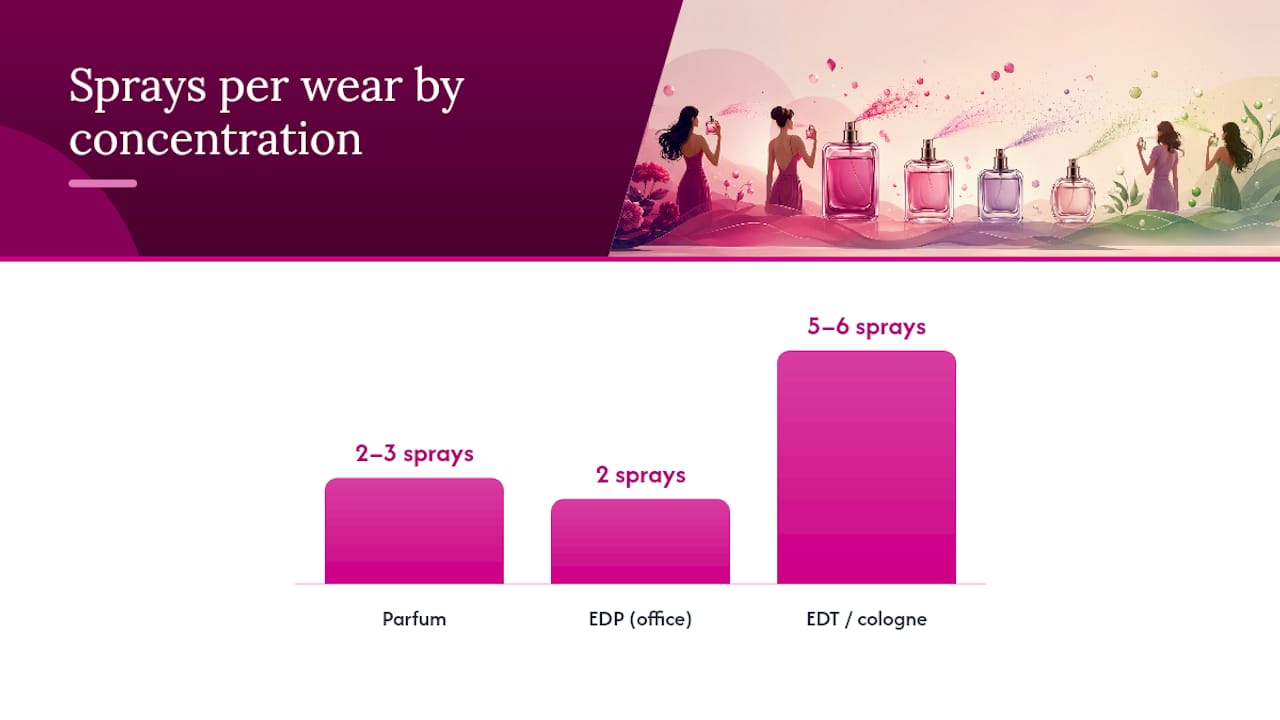
- What’s your actual budget per wear, not per bottle? Parfum costs more per millilitre but you typically need two or three sprays rather than five or six, so the effective price-per-wear can be genuinely competitive against a cheaper EDT you’re reapplying constantly.
For quick scenario matching: a signature scent for special occasions suits parfum or a rich EDP. Office wear suits EDP applied to pulse points, two sprays maximum. Hot weather and gym sessions suit EDT or a mist you can top up without overwhelming a room. Travel favours EDT for its lighter carry weight in luggage restrictions.
Pro Tip: Always sample before committing to a full bottle. A discovery set lets you test how a concentration behaves across a full day, on your actual skin, rather than guessing from a five-second spray on paper in a shop.
If you’re weighing fragrance choices against an outfit or an evening look, the seasonal logic works the same way décor and makeup choices shift between day and night, lighter for daylight, richer once the sun goes down.
Rook’s note on formulation transparency and IFRA constraints
Many fragrance houses build their collections at eau de parfum strength, chosen as a format that balances longevity against everyday wearability without tipping into overwhelming territory. Many brands test scents on skin, not just paper strips, before finalising a concentration.
Transparency has limits that aren’t about withholding information for its own sake. Exact formulas are proprietary across the entire industry, but the percentage band and the reasoning behind a concentration choice are things we’re happy to explain when asked.
Regulation shapes formulation more than most buyers realise. IFRA restrictions limit how much of certain high-impact aroma materials, oakmoss and specific musks among them, can appear in a finished fragrance regardless of the intended oil percentage. That constraint sometimes means adjusting the wider accord to preserve character while staying compliant, a balancing act that sits behind every bottle we release. Commitment to cruelty-free, sustainable formulation often runs alongside these regulatory limits rather than in spite of them.
A perfumer’s perspective on choosing concentration
Every concentration decision we make involves the same trade-off: how much oil can this particular accord carry before it stops smelling like the story we’re trying to tell and starts smelling like a stronger version of something less interesting.
Parfum genuinely earns its price when a formula has textural richness worth preserving, deep resins, real leather notes, dense woods that need the fuller oil load to unfold properly on skin. EDP is often considered a good value option for daily wear, offering depth and wear time that can last a working day with fewer reapplications compared to EDT.
If there’s one thing worth remembering, it’s that the concentration figure on the box is a starting point for your nose, not the final verdict. Test on your own skin. Give it the full four hours before deciding.
— Rook
Explore Rookperfumes’ eau de parfum collection
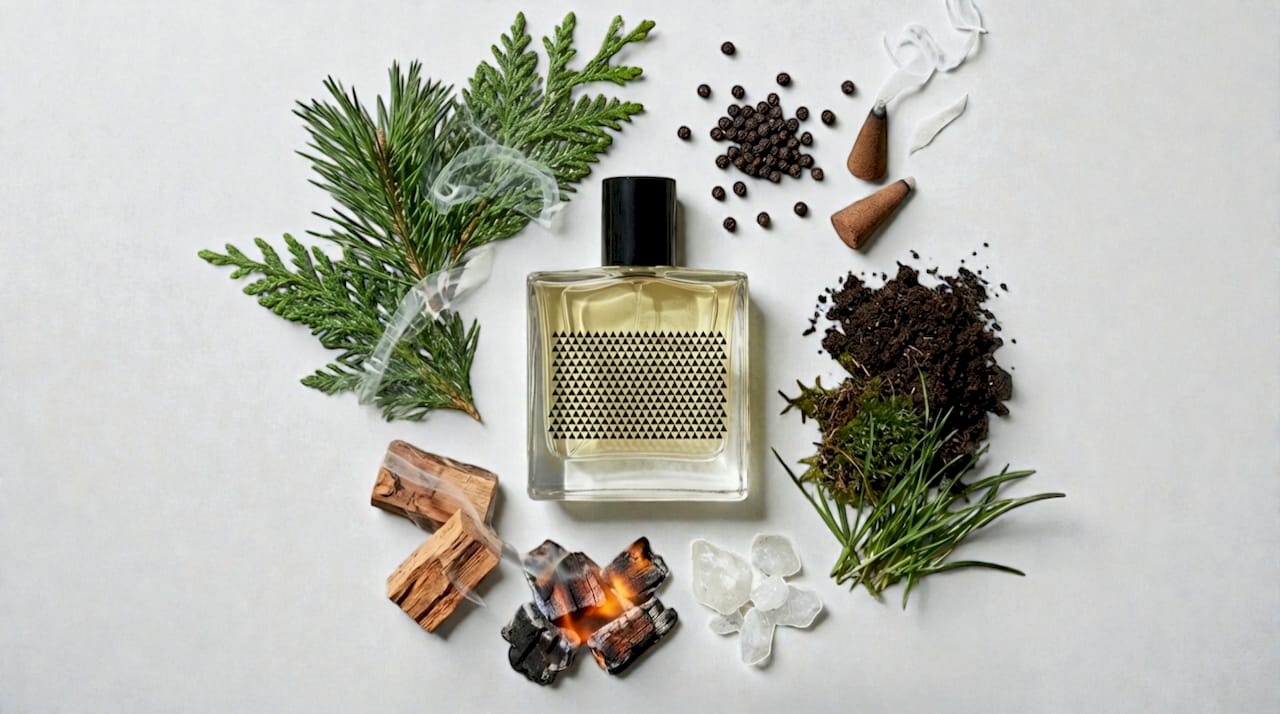
Forest Eau de Parfum leans into pine and cedar, a woodland accord where the EDP concentration lets the drier, resinous base notes carry through an entire afternoon outdoors.
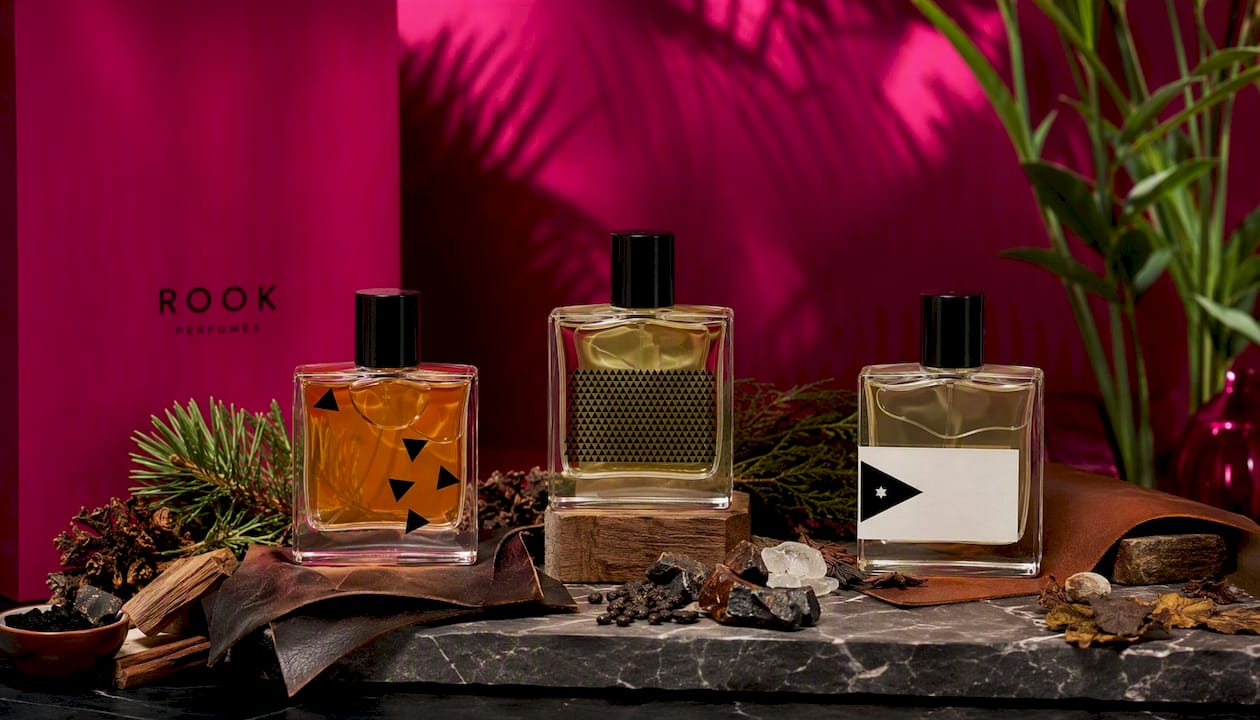
Suede Eau de Parfum takes the same EDP strength somewhere bolder, leather and cognac built to project properly into an evening rather than fade after cocktails. Misk Eau de Parfum uses that 15–20% oil band to let its patchouli and musk accord sit close and warm on skin, the kind of signature depth that thinner concentrations simply can’t hold onto.
If unsure which concentration suits you, consider using discovery sets to test fragrances on your skin over a full day, helping to make a better choice before purchasing a full bottle.
Sources
FAQ
What are the five levels of perfume concentration?
These bands are industry conventions rather than legally fixed figures, so ranges shift between houses.
Which perfume concentration is best?
There’s no single best concentration, only the best fit for your situation. Eau de parfum is the most versatile everyday choice, balancing longevity and projection, which is why most of Rookperfumes’ collection is built at that strength.
Is 20% perfume concentration high?
Expect six to eight hours of wear at minimum, often longer depending on the materials used.
Is a 40% oil concentration good for perfume?
It suits signature scents worn for depth and longevity rather than room-filling projection, and usually needs only one or two sprays per application.
0 commenti