

Yes, layering works: apply the longer-lasting, heavier fragrance first as an anchor, then add a lighter scent to lift and personalise it. That single rule solves most beginner mistakes before they happen. Grab two bottles you already own, or a scented lotion and a perfume, and test the pairing on skin for a full afternoon before you judge it.
TL;DR:
- Using a heavier, long-lasting fragrance as an anchor before adding a lighter scent creates more complex and longer-lasting combinations.
- Pair fragrances that share or complement a base note, such as citrus with wood or floral with musk, to ensure harmonious layering.
- Applying one to two sprays per scent and waiting 60 to 90 seconds between layers enhances blending and prevents muddiness.
- Testing on moisturized skin and checking the scent at one and four hours helps confirm the longevity and harmony of the layering.
- Rook’s fragrance sets and travel atomizers make experimenting affordable and prevent waste by allowing multiple tests without full bottle commitments.
Table of Contents
- What is perfume layering and why does it work?
- Understanding fragrance structure and scent families
- How do you layer perfumes step by step?
- Which perfume combinations should you try first?
- Common layering mistakes and how to rescue them
- Maker tips for testing new layers
- A note on scent, memory, and experimenting
- Practise layering with Rook’s discovery sets and travel atomisers
- Sources
- FAQ
What is perfume layering and why does it work?
Layering means applying two or more distinct fragrances or fragranced products in sequence on skin or clothing to build a personalised scent with more depth and staying power. It’s different from mixing two perfumes together in a bottle, which blends the raw liquids rather than letting each one develop separately on your skin. Layering lets each composition unfold in its own time, so you get top notes from one bottle meeting the base notes of another.
The appeal goes beyond novelty. A well-built layer gives you:
- A signature scent nobody else is wearing, built from bottles anyone can buy
- Longer wear time, since a heavier base slows the evaporation of a lighter top layer
- The flexibility to dial a fragrance up for winter or down for a humid afternoon
- A way to match scent to mood rather than being stuck with one fixed profile
Layering isn’t new. Perfumers in the Middle East and South Asia have combined oils, incense, and attars for centuries, using scent the way a tailor uses fabric. Western fragrance houses only turned it into a retail trend in the last decade or so, but the underlying logic hasn’t changed.
Understanding fragrance structure and scent families
Every perfume moves through three stages: top notes (the first 15 to 30 minutes, usually citrus or light florals), heart notes (the next few hours, often floral or spicy), and base notes (the lasting foundation, typically wood, musk, or resin). Layering succeeds or fails on how these stages meet. If your anchor’s base note fights your lift’s heart note, you’ll smell confusion rather than complexity.
Scent families give you a shortcut to good pairings:
- Citrus and wood: bergamot or lemon over cedar or sandalwood reads as fresh but grounded
- Floral and musk: rose or jasmine layered onto a soft musk base feels warm without turning heavy
- Gourmand and spice: vanilla or tonka bean with cardamom or clove adds richness without cloying
- Two heavy orientals together: almost always a mistake, since amber, oud, and dense incense all compete for the same space on your skin
The clarity principle matters more than family-matching alone. Fragrances built around a few spotlighted notes layer far more predictably than dense, maximalist compositions, because there’s room left for a second scent to register. A linear citrus cologne welcomes a partner. A sixteen-note oriental rarely does. If you want to understand why some compositions read as “clean” and others as “busy,” Rook’s guide to making a perfume walks through how ingredient selection creates that effect from the perfumer’s side.
How do you layer perfumes step by step?
Layering rewards a fixed sequence rather than guesswork. Here’s the routine to memorise:
- Moisturise first, if you’re using it. A scented or unscented body lotion on damp skin gives fragrance something to cling to, which is why starting with moisturised skin extends wear noticeably compared with applying straight to dry skin.
- Apply your anchor. This is the heavier, longer-lasting composition, an amber, a resin, a deep woody scent. One to two sprays on pulse points (wrists, neck, chest) is enough. Wait 60 to 90 seconds before moving on.
- Add your lift. This is the lighter, more volatile scent that sits on top. Apply it to the same points for an integrated blend, or to different points, such as behind the knees or in the hair, if you want each fragrance to develop more independently rather than merge into one.
Amounts matter more than most people assume. One to two sprays per fragrance is the working standard. Oils and lotions don’t spray, so a dab rubbed gently into the skin does the same job, and it tends to hold longer than an alcohol-based spray because there’s no evaporation carrier pushing the scent off skin quickly. If you’re testing on the go, a small refillable atomiser lets you carry a sample without hauling a full bottle.
Format changes the outcome. Eau de parfum concentrations sit closer to the skin and last longer than eau de toilette, which makes EDP the more forgiving anchor choice. Oils, being carrier-based rather than alcohol-based, often outlast both, which is why industry voices favour fragranced body cream as an easy, low-risk way to layer for subtlety.
Pro Tip: Avoid spraying directly onto wool, silk, or delicate synthetics. Alcohol-based sprays can leave marks or dull the fabric. Mist into the air and walk through it if you want scent on clothing rather than skin.
Which perfume combinations should you try first?
Start with pairings that lean on a shared or complementary base note, so the eventual dry-down feels intentional rather than accidental. Here are combinations grouped by mood and occasion:
- Fresh daytime: a citrus cologne (bergamot, grapefruit) over a light cedar or sandalwood base. Reads clean and office-appropriate.
- Cool-weather evening: a rich amber or smoky incense-led eau de parfum as anchor, lifted with a single spray of soft rose or iris. Warm enough for a winter dinner without turning cloying.
- Warm-weather afternoon: a green fig or light aquatic top note over a musk lotion base. Keeps you fresh without adding weight in the heat.
- Gourmand comfort: vanilla or tonka bean layered with a touch of black pepper or cardamom. Works well for casual autumn wear.
- Formal occasion: a woody amber anchor with a single floral lift, applied sparingly, matched to how you’d layer a formal outfit rather than a casual one, since restraint in styling applies just as much to scent as to clothing.
- Casual weekend: a soft musk base with a citrus or herbal top note, low effort and easy to reapply.
- Date night: a resinous or spiced anchor with a light floral or fruity lift, applied to pulse points for an integrated, close-to-skin blend.
None of these need brand-matching. What matters is that the anchor’s base note doesn’t clash with the lift’s opening, and that you’re choosing the pairing to match a mood rather than forcing two random bottles together because they’re both in your collection.
Common layering mistakes and how to rescue them
Muddiness is the most common complaint, and it almost always comes from one of two causes: both fragrances are complex and heavy, competing for the same olfactory space, or their base notes conflict outright, one built on amber, the other on musk, neither giving way. Community consensus among experienced layerers is that two-bottle pairings stay coherent far more often than three-bottle attempts, unless you’ve specifically tested that trio before.
If a combination goes wrong on skin, you have options. Dilute with an unscented lotion to soften an overpowering layer. Let the skin dry fully and reapply a lighter hand next time rather than adding a third scent to compensate. If a spray lands on fabric badly, blot rather than rub, and let it air out before washing.
Testing protocol is simple but frequently skipped:
- Check the blend at the one-hour mark, when top notes have settled
- Check again at four hours, when the true heart-and-base blend has emerged
- Only commit to a combination once it has passed both checkpoints
Two bottles is the standard starting point. Three is possible once you’ve already proven the base pairing works.
Maker tips for testing new layers
Choosing fragrances with clarity, rather than density, makes the whole process faster to learn. A composition built around two or three clear notes gives a second scent room to register, which is exactly the principle Rook applies when designing a new perfume: strip back to the notes that matter, and let each one do its job without competing for attention.
A few habits worth adopting from the workbench:
- Test on small skin patches or sample vials before committing a full bottle to any pairing
- Keep a short note of what you tried and how it read at the one-hour and four-hour marks
- Favour combinations with a shared or complementary base note over ones chosen purely by scent family
Discovery sets and travel atomisers exist for exactly this kind of experimentation. Buying full bottles to test theory after theory wastes both money and fragrance, and cruelty-free, sustainably made scents are worth testing properly rather than discarding half-used. An unisex, memory-inspired perfumery approach, detailed in the how to make a perfume guide, leans on the same clarity principle that makes layering successful in the first place.
A note on scent, memory, and experimenting
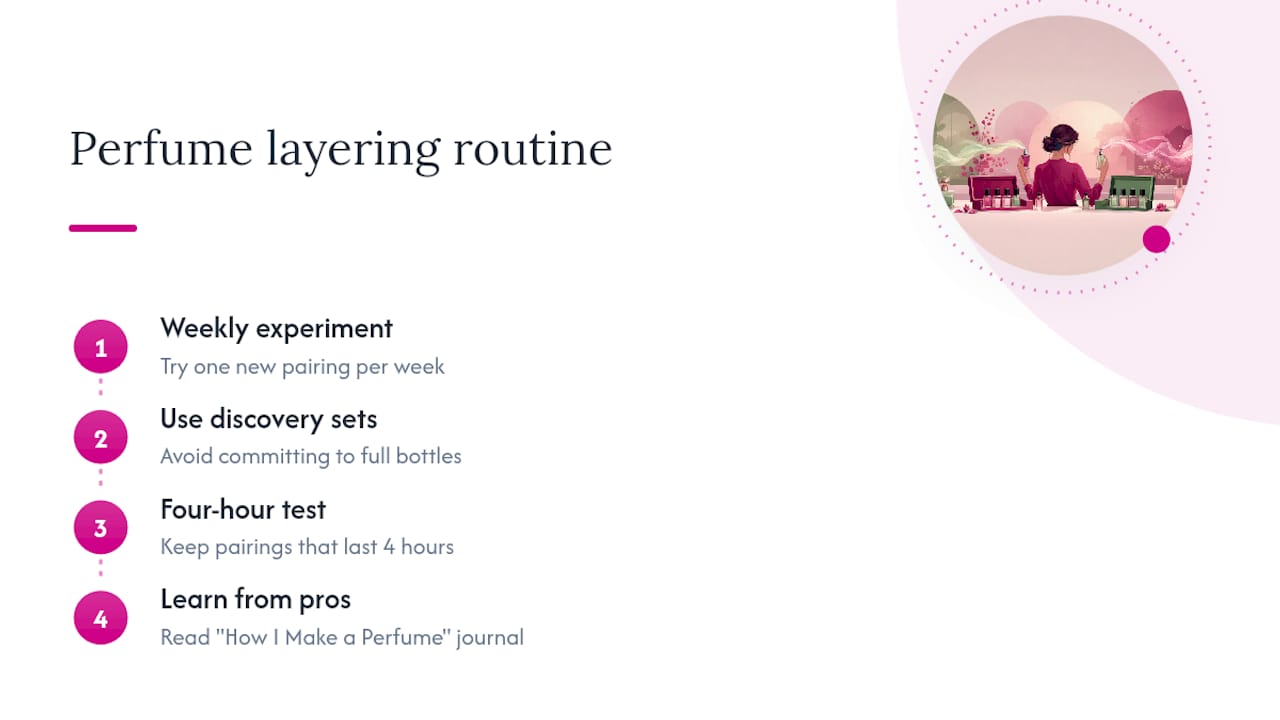
Fragrance is one of the few tools we have that can hold a memory intact, a room, a person, a season, in a way photographs rarely manage. Layering turns that into something you can build deliberately rather than leave to chance. Try one new pairing a week, using a discovery set rather than committing to full bottles, and keep whichever ones survive the four-hour test.
If you want to see how a perfumer actually thinks through note selection before a scent ever reaches a bottle, the How I Make a Perfume journal entry is worth ten minutes of your time.
— Rook
Practise layering with Rook’s discovery sets and travel atomisers
Testing pairings properly means trying several scents without committing to full bottles each time, and that’s precisely the gap Rook’s Fragrance Discovery Sample Sets close: a curated set of samples, complete with a £20, £25 or £30 voucher (depending on the set) toward a future full-size purchase, so testing costs you far less than guessing wrong with a full bottle.
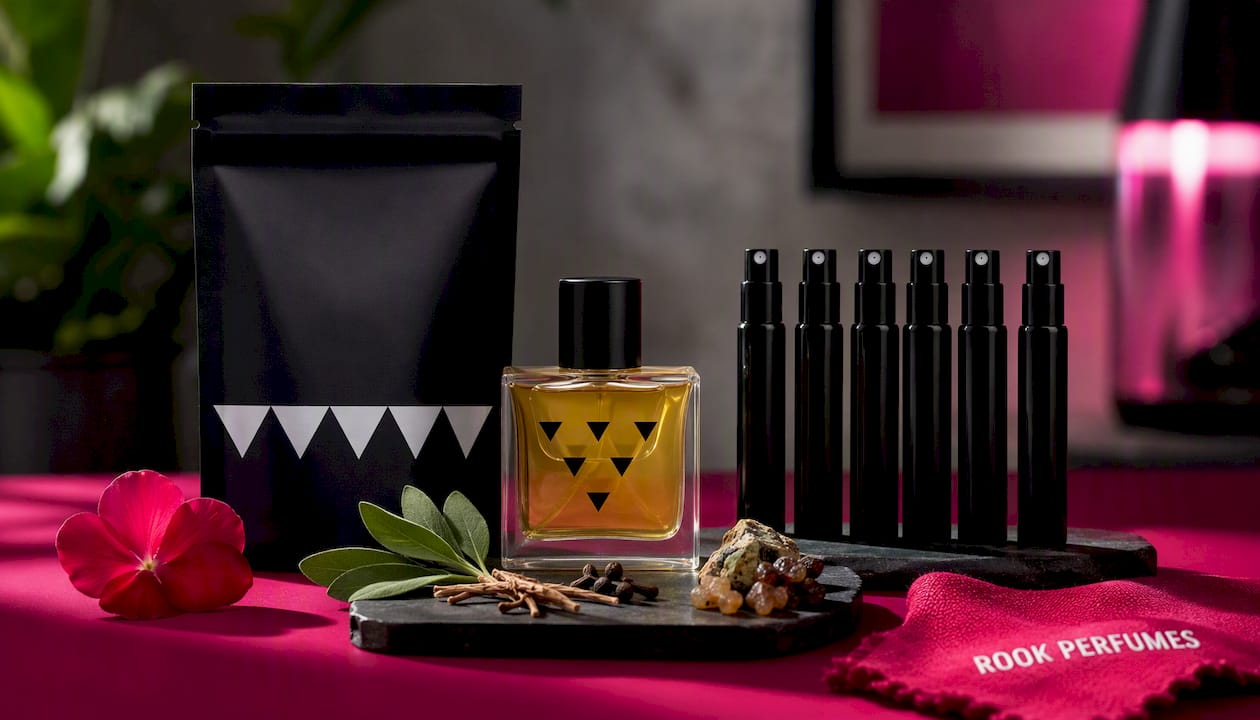
For an anchor scent worth building an evening layer around, Thurible Eau de Parfum brings sacred clove and incense, a resinous, smoky base that holds its own beneath a lighter lift without losing structure. Once you’ve found a pairing you like, the Travel Sets of six 3ml atomisers let you carry both halves of your combination in a bag. This way, you can adjust the ratio on the go instead of committing to one fixed spray count all day. Start with a discovery set, find your anchor, then build outward from there.
Sources
- Perfume Layering: The Complete 2026 Beginner’s Guide
- How to layer fragrances (Vogue)
- [An expert guide to scent layering (Independent)](https://www.the-independent.com/life-style/scent-layering-guide-fragrance-perfume-b2796542.html)
FAQ
How do you layer perfume correctly?
Apply your heavier, longer-lasting fragrance first as an anchor, wait about a minute, then add a lighter scent on top to lift it. Moisturised skin helps both layers hold longer.
What is the 50/30/20 rule in perfume layering?
There’s no verified industry standard behind that ratio. The consensus among perfumers and retail guides is simpler: use one to two sprays of each fragrance and let the anchor lead.
What perfumes layer well together?
Pairings that share or complement a base note work best, citrus with wood, floral with musk, or gourmand with spice. Avoid combining two dense, heavy orientals, since their base notes tend to compete rather than blend.
Is layering three perfumes too much?
For most people, yes. Two-bottle layering is the reliable starting point, and three-bottle combinations often turn muddy unless you’ve already tested that exact trio and confirmed it works.
0 commenti