

Build a scent profile from three fragrances you already love, run it through a quiz or algorithmic matcher to get a shortlist, then order samples or a discovery set before you spend money on a full bottle. Some perfume brands sell discovery sets for exactly this reason. Read on for the practical steps that make each stage work.
TL;DR:
- Using three favorite scents with known moods and seasons helps refine algorithmic recommendations and improves accuracy over multiple purchases.
- Fragrance families reveal key traits: florals are versatile, woody are warmer, orientals are spicy, and gourmands are sweet, guiding choices for different occasions.
- Judging a perfume by its dry-down base notes, rather than just initial scent or bottle appeal, ensures better long-term satisfaction with the fragrance.
- Sampling sets with clear testing protocols are essential, with full commitment only after a scent passes evaluations at application, 30 minutes, two hours, and six hours.
- Buying from trusted sources with transparent authenticity markers and clear return policies reduces counterfeit risks and secures better post-purchase support.
Table of Contents
- How to build your scent profile online
- What do fragrance families and notes tell you on a product page?
- How do quizzes and algorithmic finders actually work?
- How do you order and test samples before committing?
- How Rookperfumes’ discovery sets fit this process
- How do you check authenticity and avoid counterfeit perfumes online?
- What return policies and customer service should you expect?
- Author note: why sampling matters
- Start here: Rookperfumes discovery sets and where to buy
- Sources
How to build your scent profile online
Start with what you already know works. Think of three fragrances, candles or even scent memories you have loved, whether that’s a perfume you wore for years or the smell of your grandmother’s kitchen, and write down the mood, season and occasion each one belongs to. This is the raw material every recommendation tool needs.
From there, map your preferences across a few simple axes. Fresh versus warm. Floral versus woody. Soft versus bold. Most people already know instinctively where they sit on these scales, but they just haven’t written it down. Note your deal-breakers too. If synthetic musk gives you a headache or overly sweet gourmands make you feel sick, say so explicitly, because algorithmic matchers and quizzes only work as well as the negative information you feed them.
A short checklist saves you from repeating this analysis every time you shop:
- Three scents or memories you already like, with mood and season attached
- Your position on fresh–warm, floral–woody, soft–bold
- Notes or accords you actively dislike
- Occasions you’re buying for (daily wear, evening, gifting)
- Budget range as suits you or the sample sets
Save this alongside your account or in your notes app. Every time you select perfume online, you’ll refine it slightly, and within two or three purchases it becomes genuinely predictive.
What do fragrance families and notes tell you on a product page?
Every product page worth trusting names a fragrance family, and that single word tells you more than any marketing paragraph. Florals lean romantic and versatile, suited to daytime and most occasions. Woody fragrances read warmer and more grounded, often favoured for evening or colder months. Orientals (sometimes labelled amber) bring resinous, spiced depth. Fresh or citrus families work well in heat and for those who dislike anything heavy. Gourmands, built on vanilla, caramel or cocoa, skew sweet and can dominate a room if overapplied.
Beneath the family sits note structure, and this is where dry-down becomes decisive. Top notes are what you smell in the first ten minutes, usually citrus or light florals, and they vanish fastest. Heart notes emerge over the next hour and carry most of the fragrance’s character. Base notes, musk, amber, woods, resins, are what lingers on your skin for hours and what you’ll actually smell by evening.
- Top notes: first impression, fades within minutes
- Heart notes: the main body, lasting a few hours
- Base notes: the dry-down, often audible on skin for multiple hours
Pro tip: A fragrance that smells incredible in the bottle but forgettable an hour later has weak base notes for your skin chemistry. Judge a perfume on its dry-down, not its opening.
Concentration matters just as much as notes. Eau de toilette typically sits at 5 to 15% fragrance oil and lasts three to five hours. Eau de parfum runs 15 to 20% and often lasts six to eight hours with noticeably more sillage, the trail a scent leaves as you move. Pure parfum concentrations push higher again, with longer wear time but typically come in smaller bottles.
How do quizzes and algorithmic finders actually work?
Not all discovery tools do the same job, and knowing the difference stops you wasting time on the wrong one. Personality quizzes ask lifestyle questions (are you bold or understated, do you prefer mornings or evenings) and translate answers into a fragrance family suggestion. They’re a decent starting point if you have no idea where to begin, but they’re blunt instruments.
Algorithmic matchers go further, mapping note architecture against your stated favourites, disliked accords, or even a photo of a bottle you own. Community databases and algorithmic finders can surface fragrances similar to something you already wear, pulling from user-tagged notes rather than marketing copy. Crowd-sourced finders on community sites work differently again, aggregating thousands of individual reviews to flag which scents people with similar taste profiles tend to buy next.
- Personality quizzes: good for absolute beginners, weak on specifics
- Algorithmic matchers: strongest when you feed them real favourites and clear dislikes
- Crowd-sourced/community tools: best for finding close alternatives to a scent you already know
Feed any of these tools generously. Vague input like “something nice” returns generic results; specific input like “I love Chanel No.5 but find it too powdery” returns something usable. Whatever a tool suggests, treat the output as a shortlist to sample, never as a signal to buy a full bottle blind.
How do you order and test samples before committing?
Testing properly is the difference between a bottle you wear for years and one that sits unused after a fortnight. Here’s a reliable sequence:
- Order a curated discovery set or individual samples that match the profile and shortlist you’ve already built, rather than picking at random.
- Apply one fragrance per day to the same spot on your skin, ideally your wrist or inner forearm, and avoid layering it with other scented products that day.
- Track it through the stages. Note your impression at application, again at 30 minutes, at two hours, and after six hours. This is roughly the testing protocol experts recommend because it avoids olfactory fatigue and captures the true dry-down.
- Log your results in a simple table or ratings sheet: top note, heart note, base note, and an overall score out of ten for each stage.
- Only commit to a full bottle once a sample has scored well across all three phases and across more than one wear.
Testing one scent per day rather than several at once matters more than people expect. Your nose fatigues quickly, and comparing two unfamiliar fragrances side by side almost always produces a worse decision than judging each on its own merits over a full day.
How Rookperfumes’ discovery sets fit this process
Rookperfumes builds its entire model around this same sequence: profile, sample, then commit. The discovery sample sets come with a £20, £25 or £30 voucher (depending on the set) redeemable against a full bottle, so testing costs you far less than a blind purchase would. Every scent is unisex and cruelty-free, which removes one common source of hesitation when shopping for someone else or for yourself without a fixed idea of “masculine” or “feminine” fragrance.
Matching the sets to the testing protocol above is straightforward. Pick two or three samples that sit closest to your scent profile axes, run each through the day-by-day evaluation, and rate the dry-down specifically, since that’s what the voucher decision should hinge on.
Rook Perfumes was built on the idea that a fragrance should carry a story worth telling, not just a smell worth wearing. The discovery set exists so you can find that story before you commit to a bottle.
The brand’s own process, detailed in how a Rook perfume gets made, gives some sense of why the notes on each page are written with unusual specificity.
How do you check authenticity and avoid counterfeit perfumes online?
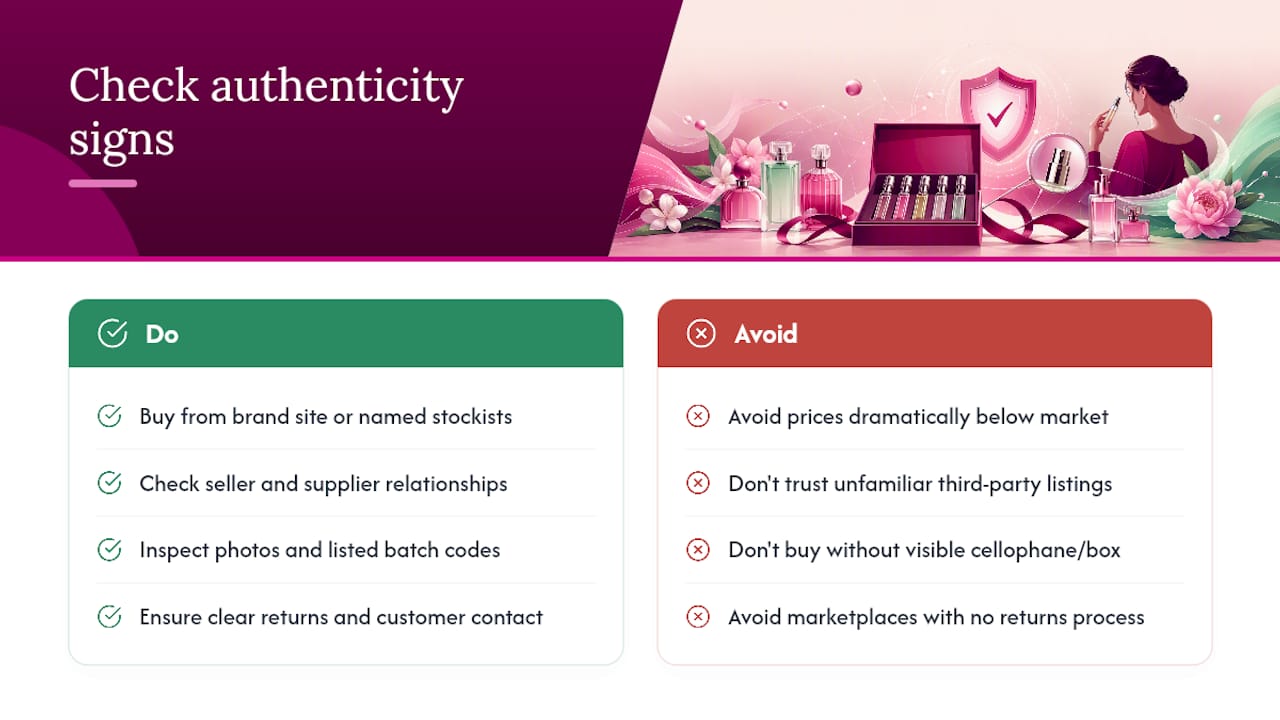
Counterfeit perfume is a genuine risk once you move away from a brand’s own website onto third-party marketplaces, and the signs are usually visible before you buy. A price dramatically below every other retailer is the first flag.
Check the seller directly. Buying from the perfume house’s own site, or from a retailer that names its supplier relationships, removes almost all of this risk. Independent brands in particular tend to sell direct or through a small number of named stockists, so an unfamiliar third-party listing claiming to stock a niche fragrance is worth treating with suspicion.
Look closely at product photography and batch codes where they’re listed. Legitimate sellers usually show the actual box, cellophane wrapping, and any printed batch code, because these details vary between production runs and counterfeiters struggle to replicate them consistently. Reviews mentioning an “off” smell, a bottle that arrived without cellophane, or packaging that looks slightly different from official images are worth reading before you order.
Finally, be wary of marketplaces with no clear returns process. Legitimate perfume houses stand behind what they sell with a proper customer service channel. A listing with no way to query authenticity, request a refund, or contact a real person is a stronger warning sign than price alone.
What return policies and customer service should you expect?
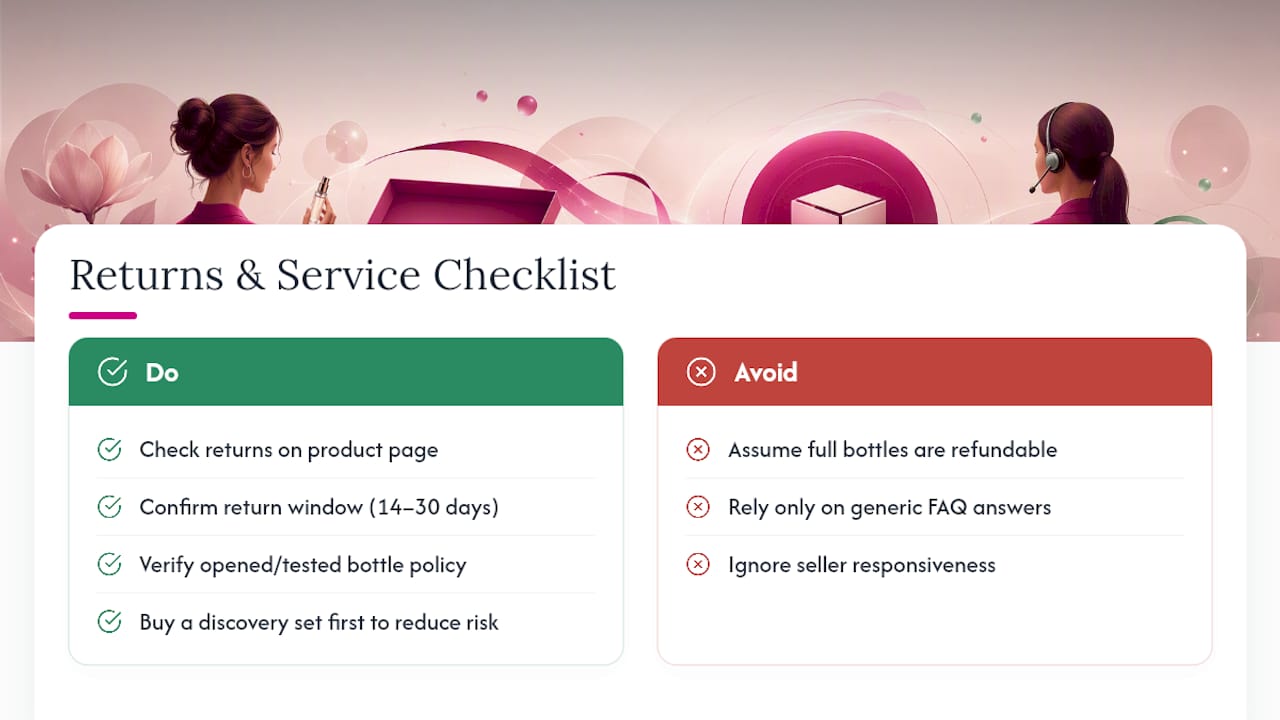
A trustworthy perfume retailer states its returns policy clearly on the product page, not buried three clicks deep in a terms document. Look for a defined return window, ideally 14 to 30 days, and clarity on whether opened or tested bottles qualify. Because perfume is a scented, personal-use product, some retailers restrict returns to unopened stock only, so check this before you buy a full bottle rather than after.
Discovery sets change this calculation. Because samples cost a fraction of a full bottle, the financial risk of an unsuitable scent is small even without a generous returns policy, which is part of why sampling first is the safer default rather than relying on the ability to return a £90 bottle.
Customer service responsiveness matters more with perfume than with most products, because questions about longevity, skin compatibility, or ingredient lists (relevant for anyone with sensitivities) need a real answer, not a generic FAQ page. A brand that responds to pre-purchase questions about note composition or allergen content is signalling that it stands behind its product beyond the point of sale. Independent and niche houses, being smaller, often respond faster and more personally than large marketplace sellers juggling thousands of orders, so factor response quality into your decision alongside the fragrance itself.
Author note: why sampling matters
Some of the best scent discoveries happen by accident, through a sample ordered on a whim rather than a bottle chosen with certainty. Fragrance is intensely personal. What reads as elegant on one person’s skin can turn sharp or flat on another’s. Testing isn’t a cautious extra step. It’s the only reliable route to a scent you’ll actually reach for.
— Rook
Start here: Rookperfumes discovery sets and where to buy
Rookperfumes gives you a lower-risk way to test the exact workflow this article describes, without committing £80 or more to a bottle you’ve never worn. The discovery sample set includes a £20, £25 or £30 voucher (depending on the set) you can put straight towards a full bottle once you’ve found your match, so the cost of testing gets absorbed into your eventual purchase rather than sitting on top of it.
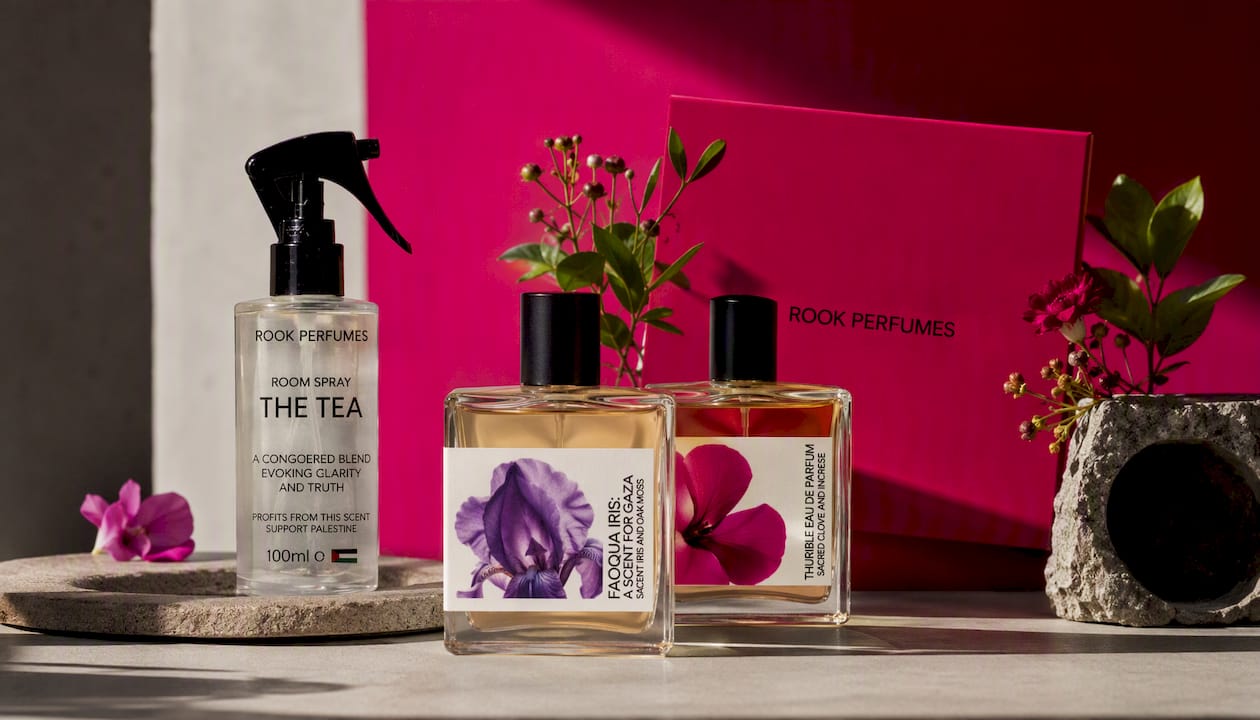
If you want a story-led starting point, Faqqua Iris pairs royal iris with oak moss and carries a cultural narrative behind the blend. For something warmer and more resinous, Thurible builds around sacred clove and incense, and if you’re furnishing a room rather than your skin, THE TEA room spray applies the same unisex, cruelty-free approach to interiors. Add two or three samples matching your scent profile to a discovery set order today, and you’ll have a real answer within a week rather than a guess.
Sources
- How to buy perfume online, according to an expert — Who What Wear
- Fragrantica — perfume community and database
0 comentários