

Start with a discovery set and one full bottle: the Fragrance Discovery Sample Sets and Misk Eau de Parfum | Patchouli Musk Magnificence cover the two ends of the spectrum well. This guide runs through both affordable-style alternatives and niche originals, but the fastest way to know what suits you is to sample through a discovery set or a set of travel atomisers before spending on a full bottle.
TL;DR:
- Sampling a discovery set allows you to test multiple Middle Eastern inspired fragrances on your skin over several days, reducing the risk of misjudging an overpowering or synthetic scent.
- Fragrances with oud, saffron, and bakhoor are highly polarizing, making full bottle purchases risky without proper testing, especially for materials like oud that can smell medicinal or overwhelming.
- Genuine inspiration involves specific raw materials like oud, amber, and labdanum, with high-concentration formats like extrait de parfum lasting significantly longer than eau de toilette or dupe versions.
- Price and transparency are useful indicators of authenticity; cheap “oud” perfumes often use synthetic accords, and brands that specify sourcing and concentration tend to be more trustworthy.
- Layering fragrances with unscented moisturizer, applying to pulse points, and storing bottles in cool, dark places can extend scent longevity and preserve resinous compounds.
Table of Contents
- Middle Eastern inspired perfumes worth sampling first
- What makes a perfume feel Middle Eastern?
- How do you choose the right one to buy?
- Dupes versus niche originals: which route makes sense?
- Applying, layering and storing these fragrances properly
- Rookperfumes: how the brand approaches Middle Eastern inspiration
- A brief history of Middle Eastern perfumery
- How to spot genuine inspiration versus marketing dressing
- Comparing perfume houses that specialise in this category
- Our take: sample first, buy with intention
- Ready to sample? Start with a discovery set
- Sources
Middle Eastern inspired perfumes worth sampling first
Every fragrance below earns its place for a specific reason, whether that’s an unusual accord, a price point that makes exploration easy, or a construction that shows off what “Middle Eastern inspired” actually means on skin. Read these as starting points for sampling, not a definitive top ten.
1. Misk Eau de Parfum | Patchouli Musk Magnificence
This is the fullest expression of the patchouli musk archetype in Rookperfumes’ range, and it wears more like a resinous skin scent than a loud statement piece. Patchouli gives it an earthy, slightly sweet backbone, while musk keeps it close to the body rather than projecting outward.
- Best for: readers who want a warm, grounding signature scent for daily wear.
- Dominant notes: patchouli, white musk, a soft amber undertone.
- Price band: mid-range, full bottle.
- How to sample: buy a travel atomiser first if you’re unsure how patchouli sits on your skin; some people find it turns sweeter after an hour.
2. Amber Eau de Parfum | Smoky Saffron Amber
Saffron and amber together produce something closer to a spice market at dusk than a straightforward “amber” fragrance. This one leans into the smoky, slightly leathery side of amber rather than the sweeter, more gourmand interpretation you’ll find elsewhere in the same family.
- Best for: wearers who find conventional amber too sugary and want something with more bite.
- Dominant notes: saffron, amber resin, a whisper of dry wood.
- Price band: mid-range.
- How to sample: the Amber Eau de Parfum rewards patience. Give it fifteen minutes before judging the drydown.
3. Thurible Eau de Parfum | Sacred Clove and Incense
Named for the vessel used to swing incense during religious ceremonies, this fragrance goes the hardest on the bakhoor and incense angle of any bottle in this list. Clove adds a warm, almost medicinal spike that keeps the incense from reading as one-dimensional.
- Best for: anyone chasing the smoky, church-like accord associated with frankincense and bakhoor.
- Dominant notes: clove, frankincense, dark incense smoke.
- Price band: mid-range.
- How to sample: this is a scent that benefits enormously from a proper sample rather than a paper strip. Try the Thurible on skin for at least a few hours.
4. Baklava Musk Eau de Parfum | Sweet Jordanian Bakery
This is the gourmand outlier of the group: pastry, honey and musk rather than resin and smoke. It draws on the same nutty, syrup-soaked profile that Middle Eastern gourmand-oriental fragrances are known for, where sweetness and warmth do the work that spice usually does elsewhere.
- Best for: readers who love gourmand fragrances but find most of them too generically “vanilla.”
- Dominant notes: honeyed pastry, toasted nuts, soft musk.
- Price band: mid-range.
- How to sample: a discovery vial is genuinely useful here, since gourmand accords can smell very different in a shop versus after a few hours on skin.
5. Jaffa Eau de Parfum | Radiant Orange Blossom
Not every Middle Eastern inspired fragrance needs to be heavy. Orange blossom, when handled well, gives you brightness and warmth without any of the smoke or resin. Jaffa sits at the lighter end of the spectrum, closer to a citrus floral than an oriental.
- Best for: warmer months, or readers new to the category who want an easier entry point.
- Dominant notes: orange blossom, light amber base, subtle citrus.
- Price band: entry level.
- How to sample: works well layered under something heavier, which is worth trying if you own both.
6. A smoky oud amber gourmand (affordable route)
Several budget-friendly houses now produce oud-amber-gourmand blends that borrow the structure of far pricier bottles: dense top notes of bakhoor smoke, a heart of aged oud, amber and labdanum, and a sweetened base. Retailers and specialist dupes lists map these regularly, since the category has a strong following among people who want the accord without the price tag.
- Best for: budget-conscious buyers who want to test whether they even like heavy oud before spending more.
- Dominant notes: oud, bakhoor smoke, amber, labdanum.
- Price band: affordable.
- How to sample: buy the smallest bottle size on offer. These formulations tend to lose complexity faster than niche oud, so there’s little benefit to buying large.
7. A bright orange blossom amber (affordable route)
The lighter counterpart to the smoky oud dupe above. Orange blossom and amber pair well because the floral keeps the amber from tipping into heaviness, and plenty of affordable brands do this combination competently.
- Best for: first-time buyers testing the category without committing to niche pricing.
- Dominant notes: orange blossom, amber, light musk.
- Price band: affordable.
- How to sample: these tend to be widely available in small sizes, so there’s no real reason to buy blind.
8. A gourmand-oriental with nuts, spice and creamy florals (niche route)
At the niche end, houses like Maison El Nabil construct gourmand-oriental scents that combine nuts, spice, creamy florals and amber into something far more layered than a typical drug store oriental. The Elixir of Dubai product description is a useful reference point for how these are built: dense, indulgent, and designed to unfold over hours rather than announce itself immediately.
- Best for: collectors who want complexity and are willing to pay for it.
- Dominant notes: roasted nuts, spice, creamy florals, amber.
- Price band: niche.
- How to sample: decants from specialist retailers are the sensible route before a full bottle purchase at this price point.
Fragrance communities such as Fragrantica publish curated collector lists precisely because this category rewards comparison shopping. No single bottle defines “Middle Eastern inspired,” which is exactly why sampling several sides by side tells you more than any review can.
What makes a perfume feel Middle Eastern?
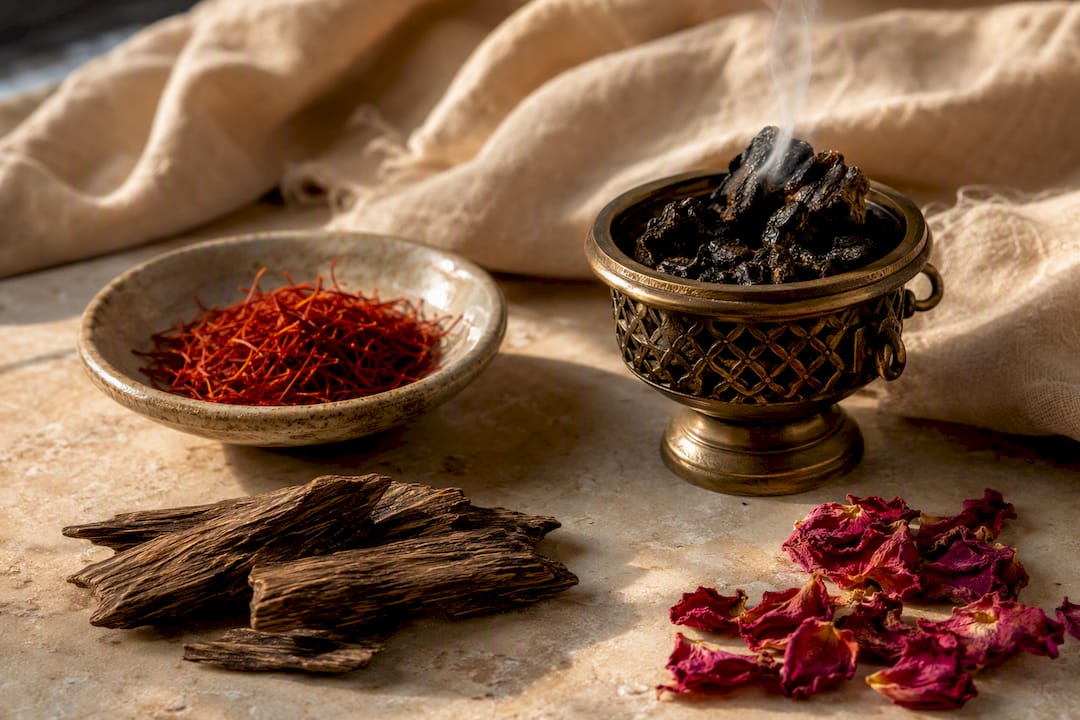
The impression comes from a specific, recurring set of raw materials rather than any single ingredient. Oud (agarwood) sits at the centre of the category: a dark, smoky, sometimes leathery material that ranges from clean and woody to intensely animalic depending on how it’s sourced and treated. Amber, in perfumery, usually means a built accord (not literal fossilised resin) combining labdanum, vanilla and benzoin to create warmth and sweetness. Labdanum on its own brings a honeyed, slightly leathery resinousness that anchors many of these compositions.
Beyond that core, a handful of materials show up again and again:
- Bakhoor and incense — smoky, resinous, often the opening act in oud-led fragrances.
- Rose — particularly Taif or Damask rose, paired with oud in one of perfumery’s oldest double acts.
- Saffron — leathery, slightly medicinal, used to add depth to spice-forward blends.
- Musk — animalic or white, providing longevity and skin-closeness.
- Vanilla and gourmand accents — sweetness that softens smoke and resin.
High-end houses have leaned into this heavily. Diptyque and other luxury brands have released Middle East inspired collections built around concentrated Boswellia (frankincense) and cedar wood, chasing the same resinous, opulent effect that traditional bakhoor produces. Dior’s Oud Ispahan does something similar with the oud-and-rose pairing, one of the most reliable archetypes in the whole category.
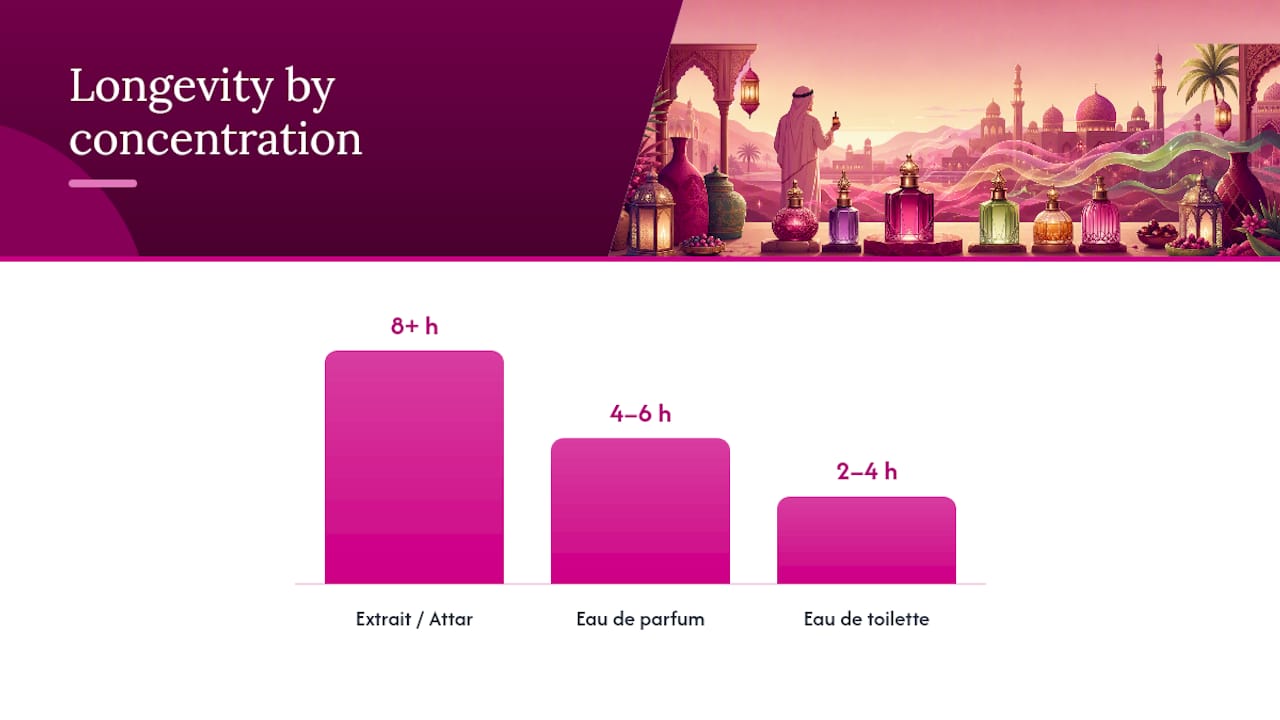
Concentration matters as much as the raw materials themselves. An extrait de parfum (or attar, the traditional oil-based equivalent) carries the highest concentration of aromatic compounds, giving the deepest, longest-lasting expression of these materials, often eight hours or more on skin. Eau de parfum sits below that, typically lasting four to six hours, while eau de toilette is lighter still and fades faster, usually within two to four hours.
When you read product descriptions for this category, a handful of terms come up constantly:
- Resinous — a thick, sticky, amber-like quality, often from labdanum or frankincense.
- Gourmand — edible-smelling, think honey, pastry or caramel.
- Powdery — soft, cosmetic, often from iris or certain musks.
- Animalic — a raw, skin-like warmth, historically from natural musk or civet, now usually synthetic.
This vocabulary matters because the terms genuinely predict how a scent will behave, not just how it’s marketed. Cyborg, a unisex fragrance built around bakhoor smoke top notes and an aged oud heart, is a clear example of how the smoky-to-resinous progression plays out from opening to base.
Nostalgia is doing more work here than most buyers realise. Interest in location-inspired scents is driven largely by the desire to capture memory and atmosphere in wearable form, whether that’s a specific city, a holiday, or an idea of a place someone has never visited. It’s why so many of these fragrances are marketed as “a story” rather than a formula.
How do you choose the right one to buy?
Work through a short checklist before spending on a full bottle. Longevity, sillage (how far a scent projects), concentration, price, ingredient transparency and any ethics or sustainability claims a brand makes are the six factors worth weighing every time.
Discovery sets, travel atomisers and decants exist precisely because this category is polarising. Oud, in particular, divides opinion sharply; some people find it intoxicating, others find it medicinal. Sampling over several days at home genuinely increases purchase confidence for exactly this reason, since a first impression on paper often bears little resemblance to how a resinous scent behaves after six hours on warm skin.
A sensible progression looks like this:
- Start with a discovery set covering several profiles at once.
- Move to a travel atomiser for the one or two scents you liked, to test them across different days and weather.
- Only buy a full bottle once you’ve worn a sample through a full day, including how it fades.
Before buying online, check the seller’s sample policy, returns process, delivery timescale and, for anything claiming to be a genuine designer or niche release, whether the listing matches the brand’s own product description. Authenticity issues are common in this category precisely because oud and amber names get borrowed loosely.
Pro Tip: Apply your sample to a pulse point, not just a paper strip, and wait at least four hours before deciding. Oud and amber accords change dramatically as they warm on skin, and the paper-strip version rarely matches the final drydown.
Dupes versus niche originals: which route makes sense?
A “dupe” is a fragrance built to approximate the scent profile of a more expensive original, usually at a fraction of the concentration and cost. The differences are rarely subtle once you know what to look for: dupes typically use lower-cost raw materials, run at a lighter concentration, simplify the note structure, and fade faster, often within two to three hours rather than six or more.
Retailers and blogs publish dupe-to-original mappings constantly, which tells you how large the demand is for testing this category before committing serious money to it.
A dupe makes sense when you’re trend-testing, working within a tight budget, or simply want to know whether you like oud before spending on a niche bottle. Niche makes more sense once you know you’re a collector, you care about unique or rare materials, or you’ve noticed a dupe fading within an hour and want the fuller version.
A few tricks close the gap between the two:
- Layer with an unscented moisturiser first. This slows evaporation and extends wear noticeably.
- Apply to hair or clothing, not just skin, since fabric holds resinous and smoky notes longer than skin does.
- Reapply once at the midpoint of your day rather than buying a stronger (and pricier) version purely for longevity.
Pro Tip: If a dupe fades too fast, don’t assume the original will smell identical, only that it will last longer. Complexity, not just longevity, is usually the real gap between the two.
Applying, layering and storing these fragrances properly
A few drops go further than you’d think with resinous, gourmand and oud-leaning scents, since these materials project strongly compared with lighter florals or citrus.
- Extrait or attar: one or two dabs on pulse points is enough; these concentrations are built to last all day on minimal product.
- Eau de parfum: two to three sprays, aimed at wrists, chest, or hair rather than clothing that will need washing.
- Eau de toilette: three to four sprays, reapplied around the midpoint of the day if longevity matters.
- Layering: start with an unscented moisturiser as a neutral base, then apply your fragrance. A light citrus cologne underneath a heavier oud or amber can soften the opening without diluting the drydown.
- Storage: keep bottles away from direct sunlight and heat, ideally in a dark, cool, dry cupboard rather than a bathroom shelf, since humidity and light both degrade resinous compounds faster than clean, drier scents.
Rookperfumes: how the brand approaches Middle Eastern inspiration
Rookperfumes is an independent fragrance house built around sustainable, cruelty-free, unisex formulations rather than seasonal trend-chasing. Every scent is designed to be memory-inspired first, which shapes how the Middle Eastern-adjacent bottles in the range are built: less about literal geography, more about the emotional and cultural weight the raw materials carry.
That approach shows up most clearly in the brand’s storytelling projects. Scent for Gaza, one of the brand’s advocacy-driven releases, uses fragrance to carry a narrative of cultural significance rather than treating the region as a decorative theme. This position is consistent with an ethos-driven approach that connects the scent with its story.
Examples representing this approach include gourmand, incense-forward, smoky saffron amber, and home fragrance compositions that extend Middle Eastern-inspired atmospheres.
Discovery sets exist because a strong, polarising accord like oud or bakhoor deserves more than a single sniff on a shop counter. Testing across several days, on your own skin, in your own environment, is the only way to know if a scent genuinely suits you rather than just impressing you for five minutes.
That’s the reasoning behind offering discovery sets rather than pushing full bottles as the default first purchase. It’s a lower-risk way to work out which profile, smoky, gourmand, floral, or resinous, actually fits how you want to smell.
A brief history of Middle Eastern perfumery
Perfumery in the Middle East predates most Western fragrance traditions by centuries. Oud, rose, and musk were traded along routes connecting the region to South and East Asia long before European perfume houses existed in their current form, and bakhoor, incense burned to scent homes, clothing, and social gatherings, remains a living tradition rather than a historical curiosity.
Attars, the concentrated oil-based perfumes traditional to the region, developed as an alternative to alcohol-based formats, partly for religious and cultural reasons, producing some of the most concentrated and longest-lasting fragrances in the world. This is part of why extrait-strength Middle Eastern inspired perfumes tend to project and last so differently from typical Western eau de toilette formats.
The commercial explosion of oud in Western perfumery over the last two decades borrows heavily from this deeper history, even when the marketing rarely acknowledges it. Understanding that oud, rose, saffron and amber carry centuries of cultural weight, not just a trend cycle, changes how you read a product description. A bottle calling itself “Middle Eastern inspired” is drawing on a genuinely old and specific tradition, not inventing an aesthetic from nothing.
How to spot genuine inspiration versus marketing dressing
Plenty of bottles slap “Arabian” or “oud” on the label without the fragrance backing it up. The clearest tell is the note list: a genuinely inspired composition names specific materials, oud, labdanum, saffron, bakhoor, rather than vague phrases like “exotic notes” or “oriental accord” with nothing concrete underneath.
Price is a rough but useful signal too. Real oud, whether natural or high-quality synthetic, is expensive to source and formulate properly, so an extremely cheap bottle claiming “pure oud” is almost never using much of it. That doesn’t make affordable interpretations worthless. It just means their construction usually leans on synthetic accords built to approximate oud’s smoky, woody character rather than genuine agarwood extract.
Check how a brand describes concentration too. “Eau de parfum” and “extrait de parfum” are not interchangeable, and a brand that’s vague about which one you’re buying is usually vague about other things as well. Genuine niche houses, and the better mainstream ones, will state concentration clearly and describe the drydown, not just the opening spray.
Finally, look at how a brand talks about sourcing and ethics. Cruelty-free and sustainability claims are easy to state and harder to substantiate, so brands that are specific about their formulation and testing practices are usually more trustworthy than ones offering only broad, unverifiable claims. If a listing reads like generic marketing copy with no ingredient specifics, treat the “Middle Eastern inspired” label with some scepticism.
Comparing perfume houses that specialise in this category
Approaches to Middle Eastern inspired perfumery split roughly into three camps. Luxury conglomerate houses, the Diors and Diptyques of the world, tend to interpret the region through a small number of flagship materials, usually oud and rose, packaged at premium price points with heavy marketing around exclusivity.
Specialist regional houses, brands built specifically around Middle Eastern perfumery traditions, tend to go deeper into gourmand-oriental construction: nuts, spice, creamy florals and amber layered with real complexity, aimed at people who already know the category well rather than newcomers.
Independent houses sit somewhere between the two, often bringing a personal or narrative angle to the same raw materials rather than treating them as a marketing theme. This is where a brand’s values, sustainability practices, cruelty-free formulation, and the story behind a scent, become as relevant to the buying decision as the notes themselves. None of these three approaches is objectively better. They serve different priorities: prestige and recognisability, depth and tradition, or story and ethics. Working out which of those three matters most to you is often more useful than comparing individual bottles.
Our take: sample first, buy with intention
Most guides to this category rank bottles as if popularity equals quality. That’s backwards. Oud, saffron and bakhoor are genuinely divisive materials, and the “best” Middle Eastern inspired perfume is the one that behaves well on your own skin across a full day, not the one topping a listicle.
The conventional advice, buy the famous name, trust the marketing, treats these fragrances as status objects first and scents second. We think that gets the priority order wrong. Ingredient transparency and honest note description should come before brand prestige, because a badly matched oud can smell overwhelming or synthetic regardless of the price tag on the box.
If you take one thing from this guide, prioritise sampling over spending. A discovery set costs a fraction of a full bottle and tells you, within days, whether smoky bakhoor or sweet gourmand musk actually suits you. That’s a better use of a fragrance budget than betting on a single blind purchase.
— Rook
Ready to sample? Start with a discovery set
Skip the guesswork of buying a full bottle blind. The Fragrance Discovery Sample Sets, which come with a £20, £25 or £30 voucher (depending on the set) towards a future order, let you test several Middle Eastern inspired profiles at once, smoky oud, sweet gourmand, floral amber, before you spend on anything larger.
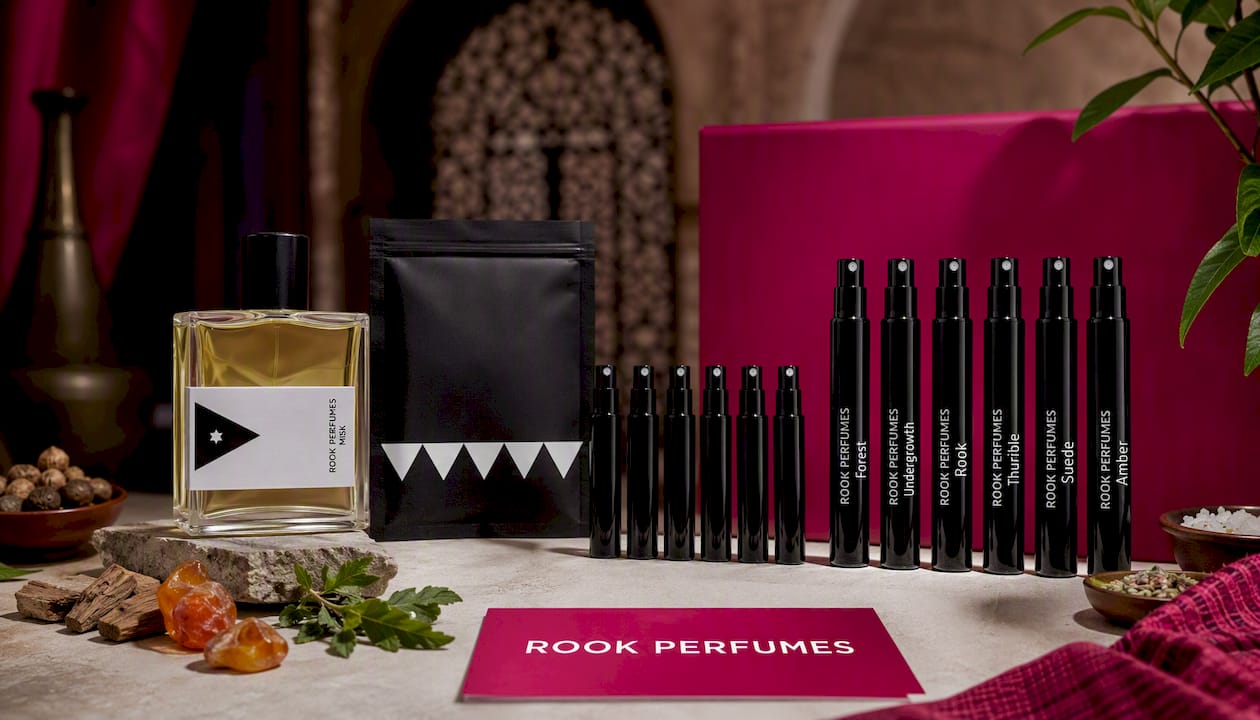
If you already know you’re drawn to warm, patchouli-forward musk, the Misk Eau de Parfum is a solid full-bottle starting point once you’ve tested it. For travelling, or simply for keeping a handful of scents on rotation without committing shelf space to full bottles, the Travel Sets of six 3ml atomisers are built exactly for that. Order a discovery set, work out which profile suits you, then decide from there whether a travel atomiser or a full bottle makes more sense for how you actually wear fragrance.
Sources
- The impact of nostalgia: why location-inspired fragrance trends are rising
- Diptyque and other luxury houses releasing Middle East inspired collections
0 comentários