

Artisanal perfumes are fragrances built by an individual perfumer, in small batches, from carefully sourced materials rather than mass-produced formulas. The right first move is never a full bottle. It’s a discovery set or travel atomiser, worn on skin across a few days, so you learn how a house’s raw materials actually behave before you commit. That’s the approach Rook takes as a working perfumer, and it’s the one we build our own sampling range around.
TL;DR:
- Artisanal perfumes are created by individual perfumers using small batches and high-grade ingredients, often with sustainable sourcing practices.
- Sampling on skin with discovery sets or travel atomizers is essential, as full bottles are a costly gamble based on limited initial impressions.
- Key brand indicators include transparent sourcing, small batch sizes, formulations that evolve over time, and eco-friendly packaging.
- Popular scent directions for artisanal perfumes include smoky amber, green botanicals, citrus, incense, and gourmand vanilla, each suited for different occasions.
- The revival of artisanal perfumery emphasizes traceable ingredients, small productions, and formula craftsmanship, contrasting with mass-market, synthetic-heavy fragrances.
Table of Contents
- What are artisanal perfumes?
- What makes a great artisanal perfume brand?
- Which scent directions should you explore first?
- How do you choose an artisanal perfume?
- How do you compare artisanal perfumes fairly at home?
- How did artisanal perfumery come to exist?
- Rook’s perspective: craft, sourcing and the emotional aim of fragrance
- Where should you start with artisanal perfume sampling?
- Sources
What are artisanal perfumes?
An artisanal perfume is authored, not assembled. A single perfumer typically controls the formula from first sketch to final batch, choosing each material for how it smells and behaves rather than how cheaply it scales. That authorship is the real dividing line between artisanal work and most commercial perfumery, where a brand licenses a formula from a large fragrance house and changes little beyond the bottle.
Small-batch production isn’t a marketing flourish here. It’s a practical constraint that shapes everything else: a perfumer working in runs of a few hundred bottles can afford a rare oud absolute or a barrel-aged vetiver that a factory producing thousands of litres simply cannot justify. That constraint is also why natural perfume roundups consistently praise artisanal houses for high-grade extracts and clean formulation, steering clear of the cheap fillers that pad out mainstream juice.
What you notice on skin differs too:
- Artisanal scents tend to evolve in phases, with the opening, heart, and dry down telling distinct chapters rather than one flat accord.
- Concentration is usually higher, which slows the fade and deepens sillage.
- Formulas often mix high-grade absolutes with a small number of safe synthetics, chosen for performance rather than cost cutting.
- Batch variation is common and, done properly, deliberate rather than sloppy.
Sustainability has moved from a nice extra to a near-default expectation among newer artisanal houses, a shift worth understanding before you start comparing brands.
What makes a great artisanal perfume brand?
Sourcing transparency is the first thing worth checking, and it’s the hardest for a brand to fake convincingly. A house that can tell you where its oud comes from, how its vanilla is farmed, or why it chose a particular absolute has usually done the sourcing work that mass-market brands skip entirely. Third-party marks like ECOCERT, Fair for Life, or membership of bodies such as the Natural Perfumers Guild aren’t universal requirements, but they’re useful reference points when they appear.
Look for these signals when you’re weighing up a brand:
- A named perfumer. Authorship you can trace, not an anonymous “master perfumer” claim.
- Visible batch sizes. Houses proud of small runs usually say so.
- Composition that shifts over time, rather than smelling identical at hour one and hour six.
- Refillable or recyclable packaging, sometimes paired with a QR code linking to sourcing detail and information on how to spot sustainable materials for eco-friendly fashion (The Cork Store).
- Evidence of green chemistry or upcycled materials where fully natural sourcing would strain supply or endanger a species.
Smaller runs also give a perfumer room to adjust for seasonal variation in raw materials, which Harper’s Bazaar notes can make batch-to-batch differences a feature of the craft rather than a flaw, provided the brand is upfront about it. Reviewers at The Good Trade have also flagged that some of the strongest artisanal formulations blend safe synthetics with natural extracts deliberately, because a pure-natural rule can push a brand toward over-harvesting scarce botanicals.
Pro Tip: Ask a brand directly how it sources one specific ingredient, not “are you sustainable?” A vague answer to a specific question is the clearest sign of greenwashing you’ll get.
Which scent directions should you explore first?
Five broad directions cover most of what artisanal houses do well, and each rewards a different kind of wearer.
- Smoky amber. Warm, resinous, built around labdanum or benzoin. Suits evening wear and cooler months. A good example holds its warmth for several hours without turning cloying.
- Green botanical. Galbanum, fig leaf, crushed herbs. Suits daytime and warmer climates. The best versions smell alive rather than simply “fresh.”
- Citrus-arte. Elevated citrus built on real bergamot or yuzu rather than synthetic lemon. Short-lived by nature, so layering or reapplication matters.
- Incense and resin. Frankincense, myrrh, sometimes a smoky birch tar note. Suits those who want gravity and a slightly austere character.
- Gourmand-vanilla. Tonka, vanilla absolute, sometimes cacao. Suits people newer to niche fragrance who want warmth without going fully oriental.
For each, the sampling logic is the same: buy small before you buy full-size, because a good artisanal bottle typically runs from around £70 to £150 or more, and that’s real money to risk on a guess. Discovery formats exist precisely to remove that guesswork.
We built three products around exactly this problem, and each solves it differently:
- The Fragrance Discovery Sample Sets – £20–£30 Voucher Included suits the breadth-seeker who wants to taste widely across scent families before narrowing down. The voucher folds straight into a future full-bottle order, so trying widely costs you nothing extra in the long run.
- The Travel Sets | 6 x 3ml Atomisers suit someone who has already shortlisted a few scents and wants to live with them across different days, climates, and moods, which single sample vials rarely allow.
- The Discovery Set Sampler suits a more focused explorer who has a rough direction in mind and wants a tightly curated introduction rather than the full spread.
Fair value in artisanal pricing usually reflects material cost and batch size, not marketing spend. A full bottle built on real oud absolute is a different proposition to one from a house leaning on brand story alone.
How do you choose an artisanal perfume?
Work through this checklist before you spend on a full bottle:
- Sample first. Never buy a full bottle from a description or a first spray on paper.
- Test on skin, not paper. Skin chemistry changes how oils and absolutes read, sometimes dramatically.
- Wait for the dry down. The opening 15 minutes rarely tells you the true character of a scent; give it two to three hours.
- Check ingredient transparency. A brand that lists absolutes and key materials by name is more trustworthy than one that says “natural blend.”
- Confirm packaging practice. Refillable bottles or recyclable materials suggest a brand that’s thought past the sale.
- Compare price per millilitre, not just the sticker price, since concentration varies widely between houses.
When you’re speaking directly to a perfumer or a boutique seller, ask about batch size, allergen declarations, and where key naturals were sourced. A confident, specific answer is worth more than any certification logo.
Pro Tip: If a brand’s sustainability page reads like a mission statement with no supply chain detail, that’s the red flag itself. Genuine transparency means naming suppliers or regions, not just intentions.
How do you compare artisanal perfumes fairly at home?
- Test no more than three or four scents in one sitting. Your nose fatigues faster than you’d expect.
- Leave 20 to 30 minutes between sprays so one scent doesn’t bleed into your read of the next.
- Judge on skin, not on a paper strip, for any final decision.
- Log each test on a card: date, weather, how long it lasted, and your honest verdict.
- If layering, start with the lighter scent underneath and add sparingly, noting whether longevity improves or the combination turns muddy.
A sample earns a full-bottle purchase when it survives a full day’s wear, several different weather conditions, and still makes you want to reapply on day four.
How did artisanal perfumery come to exist?
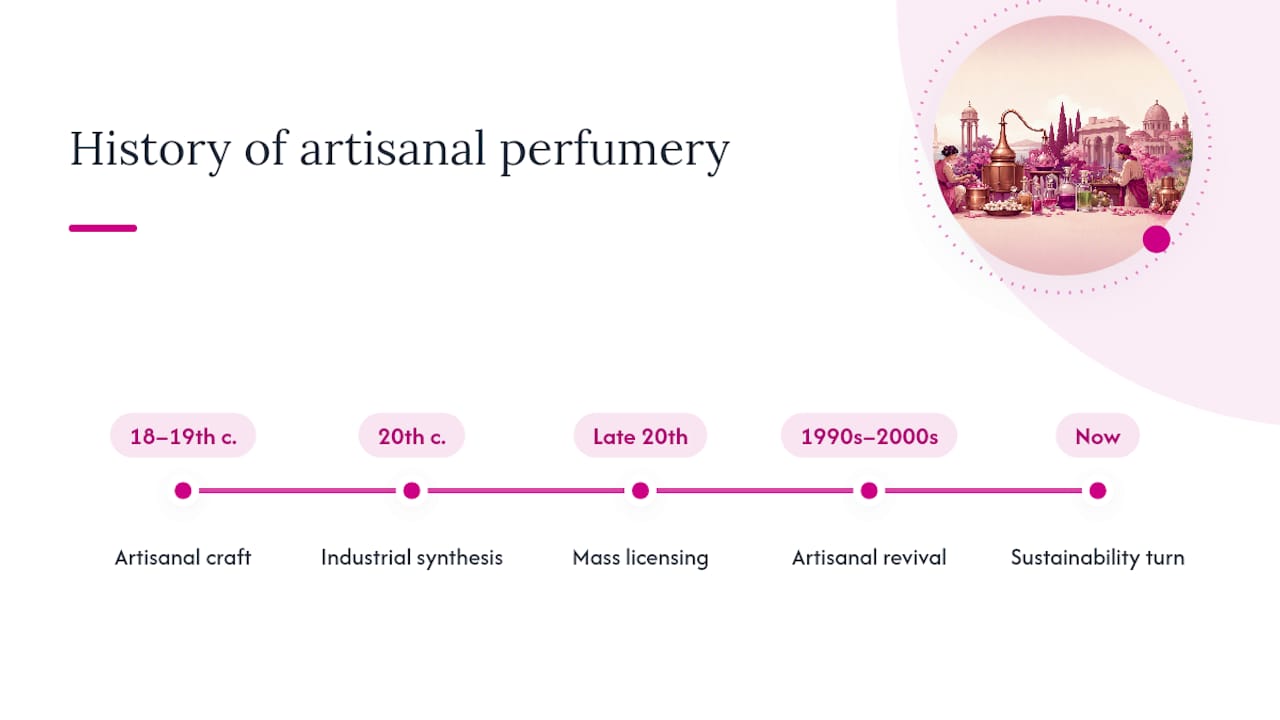
Perfumery was an artisanal trade for most of its history. Grasse perfumers in the 18th and 19th centuries built reputations on personal formulas and local flower harvests, working in quantities that look tiny compared to modern output. The shift toward mass production arrived with 20th-century industrial synthesis, when aroma chemicals made consistent, cheap, infinitely scalable scent possible for the first time.
That scale came at a cost to individuality. Big fragrance houses began licensing formulas to fashion and celebrity brands, and by the late 20th century, most perfume on shelves traced back to a handful of large manufacturers producing near-identical structures with different names on the bottle.
The niche and artisanal revival of the 1990s and 2000s, led by independent houses working outside that system, pushed back against that flattening. It brought back named perfumers, unusual raw materials, and formulas built around a single idea rather than market testing. The most recent turn, still unfolding now, has folded sustainability into that same independent spirit: traceable sourcing, smaller runs, and packaging designed with an end-of-life in mind, rather than the sustainability language arriving as an afterthought bolted onto an existing formula.
Rook’s perspective: craft, sourcing and the emotional aim of fragrance
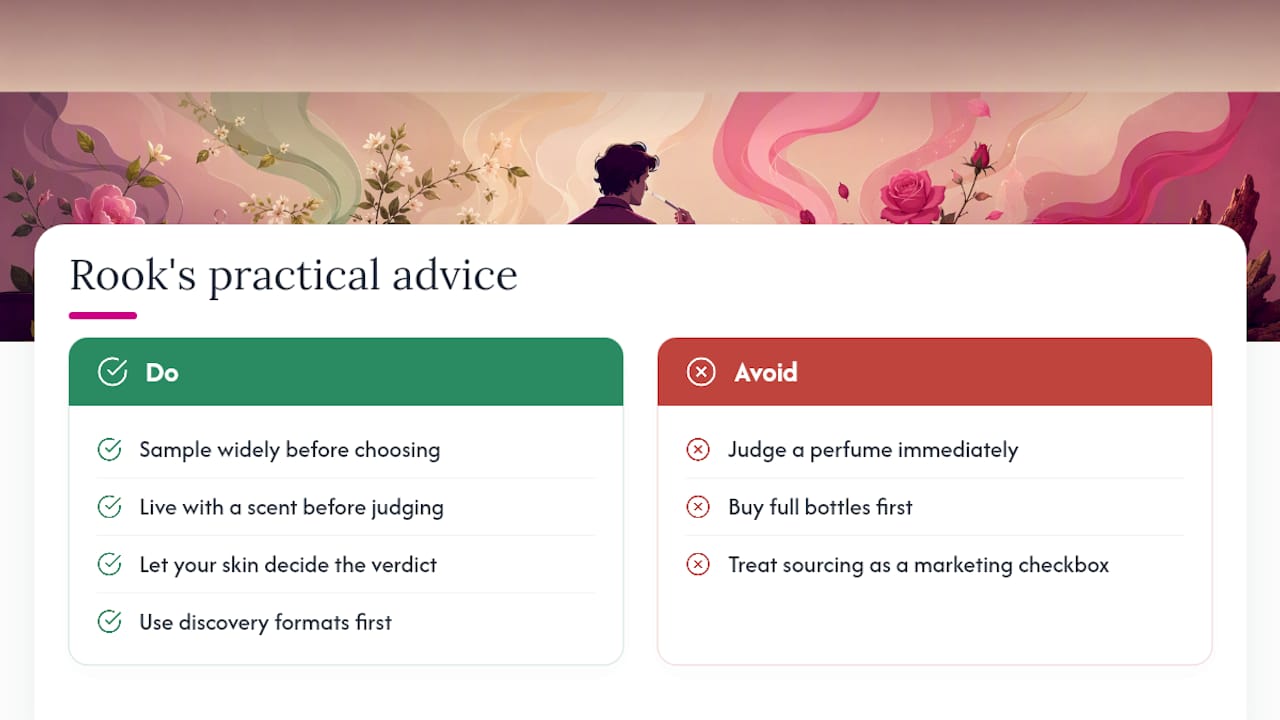
Working formulas by hand, in small batches, changes what you’re willing to compromise on. You feel the cost of a rare absolute directly, so you use it where it earns its place, not everywhere. Traceable sourcing isn’t a marketing checkbox from inside the process. It’s the difference between a scent that means something and one that’s simply pleasant.
The honest answer to “how do I find the right artisanal perfume” is still: sample widely, live with a scent before judging it, and let your skin decide. That’s why we built discovery formats rather than pushing full bottles first.
— Rook
Where should you start with artisanal perfume sampling?
Committing to a full bottle on a first sniff is the single most common mistake enthusiasts make with artisanal fragrance, and it’s an easy one to avoid. This sampling range is designed to let you test real formulas on real skin before spending on a full-size bottle.
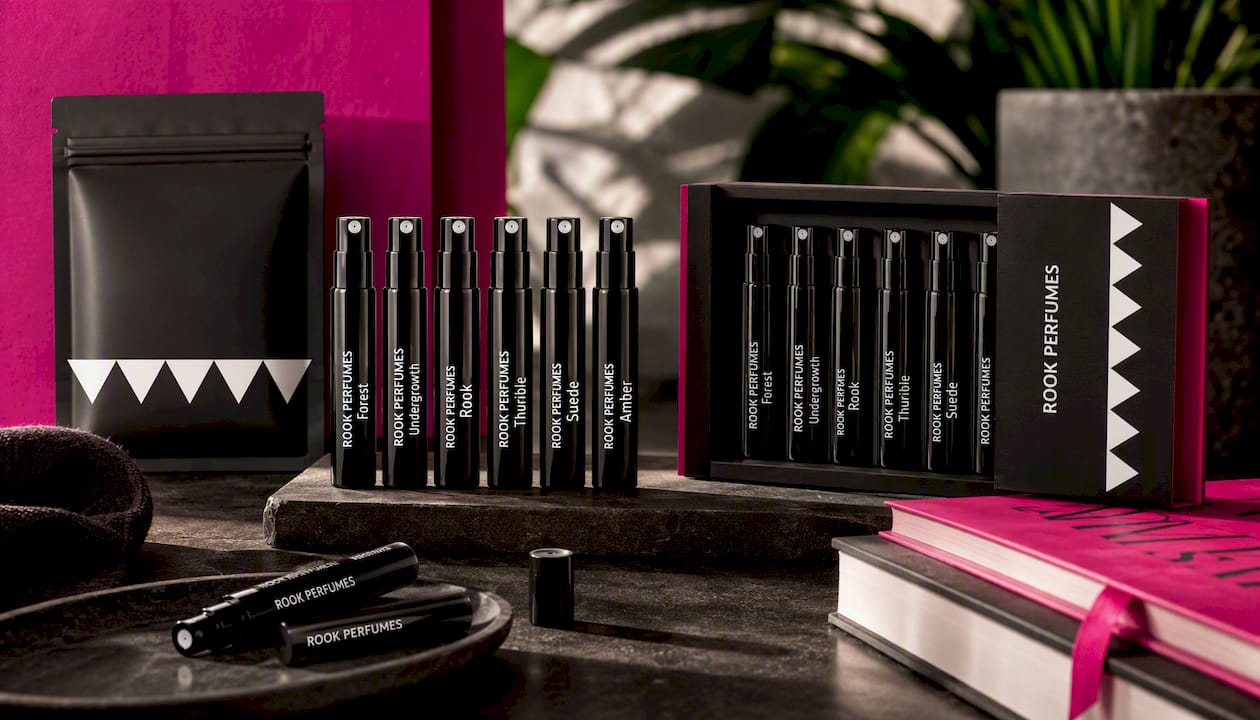
If you want to taste broadly across scent families, the Fragrance Discovery Sample Sets – £20–£30 Voucher Included is the natural starting point. It’s built for breadth, and the voucher (£20, £25 or £30, depending on the set) rolls straight into your next full-bottle order, so the exploration costs you nothing extra once you’ve found your scent. If you’ve already got a shortlist and want to see how a fragrance holds up across different days and settings, the Travel Sets | 6 x 3ml Atomisers gives you six proper wears rather than a single vial. And if you’d rather go deep on a smaller, curated selection than wide across everything, the Discovery Set Sampler is the tighter, more focused route in.
Whichever you pick, sample on skin, give each scent a full day, and let the dry down make the decision for you.
Sources
- Sustainable perfumes: What sustainability in fragrance means — Harper’s Bazaar
- 12 natural perfumes that actually smell good — The Good Trade
- 20 eco-friendly perfume brands for a sustainable scent — Conscious Life & Style
0 comments