

Sillage is the scented wake a perfume leaves behind as the wearer moves. The word comes from French (pronounced “see-yahzh”), where it originally described the trail left by a boat on water. In fragrance, it’s distinct from projection or longevity: sillage is what lingers in a room after you’ve already left it.
TL;DR:
- Fragrances with diffusive ingredients like hedione and synthetic musks can create a strong sillage even at lower concentrations.
- Movement, room temperature, and skin condition significantly influence how far a scent trails behind you.
- Testing sillage effectively involves walking through enclosed spaces and noting the scent’s detectability from behind rather than just on the skin.
- For close quarters or daytime wear, choose scents with subtle sillage; for evening or entering a room, select fragrances designed for greater carry.
- Sampling before committing helps identify which fragrances leave a trail suited to your environment and personal preference.
Table of Contents
- What is sillage, and where does the term come from?
- Sillage vs projection vs longevity: what’s actually different?
- What controls how far a scent trails behind you?
- How do you actually test a perfume’s sillage before buying?
- Rook’s approach to building sillage into a fragrance
- When should you choose a scent that trails, and when should you hold back?
- Try a Rook discovery set before you commit to a full bottle
- Sources
- FAQ
What is sillage, and where does the term come from?
The word borrows its meaning directly from that boat wake image. Just as a vessel leaves a visible trail on the water’s surface, a wearer leaves an invisible trail of scent through a hallway, an office, or a doorway. Sillage) describes exactly that: the olfactory shadow that lingers after someone has passed through.
Perfumers use the term as shorthand for how a fragrance “travels.” A scent with generous sillage announces itself before the wearer arrives and lingers well after they’ve gone. A scent with modest sillage stays close, noticed only by someone standing near you.
You’ve likely noticed sillage without naming it. Common moments where it shows up:
- Walking into a lift someone has just left, and catching the last of their scent
- Passing through a hallway at work and knowing a colleague went that way minutes ago
- Hanging a coat on a hook and finding the room still carries a trace of it hours later
- Sitting down at a restaurant table where the previous guest’s perfume still hangs in the air
None of that requires the wearer to be in the room. That’s the whole point of sillage: it survives the person.
Sillage vs projection vs longevity: what’s actually different?
These three terms get used interchangeably, and that’s where most confusion starts. They measure different things entirely.
Projection is how far a scent radiates from your skin while you’re standing still, essentially the “bubble” of fragrance around you. Longevity is simply how long you can smell the perfume on your own skin, from first spray to the point it fades. Sillage is neither of those. It’s specifically the trail perceived once you’ve moved on, and it operates independently of both other traits.
A fragrance can last eight hours on skin (excellent longevity) while barely reaching an arm’s length from your body (low projection) and leaving nothing behind you in a corridor (low sillage). Equally, a scent can announce itself the moment you enter a room, fade within three hours, and still leave a noticeable trail wherever you walked. The three don’t move in lockstep.
If you’re trying to work out which trait you’re experiencing, ask yourself:
- Can I smell it clearly on my own wrist right now? That’s longevity.
- Can someone standing a metre away smell it while I’m stationary? That’s projection.
- Does someone notice it in a room after I’ve already left? That’s sillage.
What controls how far a scent trails behind you?
Ingredient choice matters more than most wearers assume. Certain molecules are simply built to diffuse. Compounds like hedione, Iso‑E Super and synthetic musks create an amplified trail even in fairly light compositions, which is why a delicate-smelling scent can still leave a surprisingly strong wake. Volatility alone doesn’t predict this. A molecule can evaporate quickly without diffusing widely, and vice versa.
Concentration tier plays a role, but a smaller one than people expect. It’s tempting to assume extrait (highest concentration) always trails harder than an eau de toilette. In practice, an extrait can sit close to the skin while an EDP built with diffusive synthetics leaves a far more pronounced trail. Knowing what’s actually in the bottle tells you more than the concentration label does.
Your own body plays a part too. Skin temperature, hydration levels, and even your skin’s microbiome all affect how a fragrance diffuses off you, which is why the same perfume behaves differently on two people.
Environment finishes the job:
- Warm rooms speed up evaporation and broaden the trail
- Cold, dry air tends to keep scent closer to the body
- Humidity and airflow change how far molecules carry
- Walking, gesturing, and general movement physically push scented air behind you, which is the real trigger for sillage in the first place
Pro Tip: If you want a fragrance to feel more intimate in a small meeting room, skip the extra spray. Moisturised skin already carries scent further, so a lighter hand does more work than you’d think.
How do you actually test a perfume’s sillage before buying?
You don’t need laboratory equipment. Sillage shows up in ordinary movement, so the best tests recreate that.
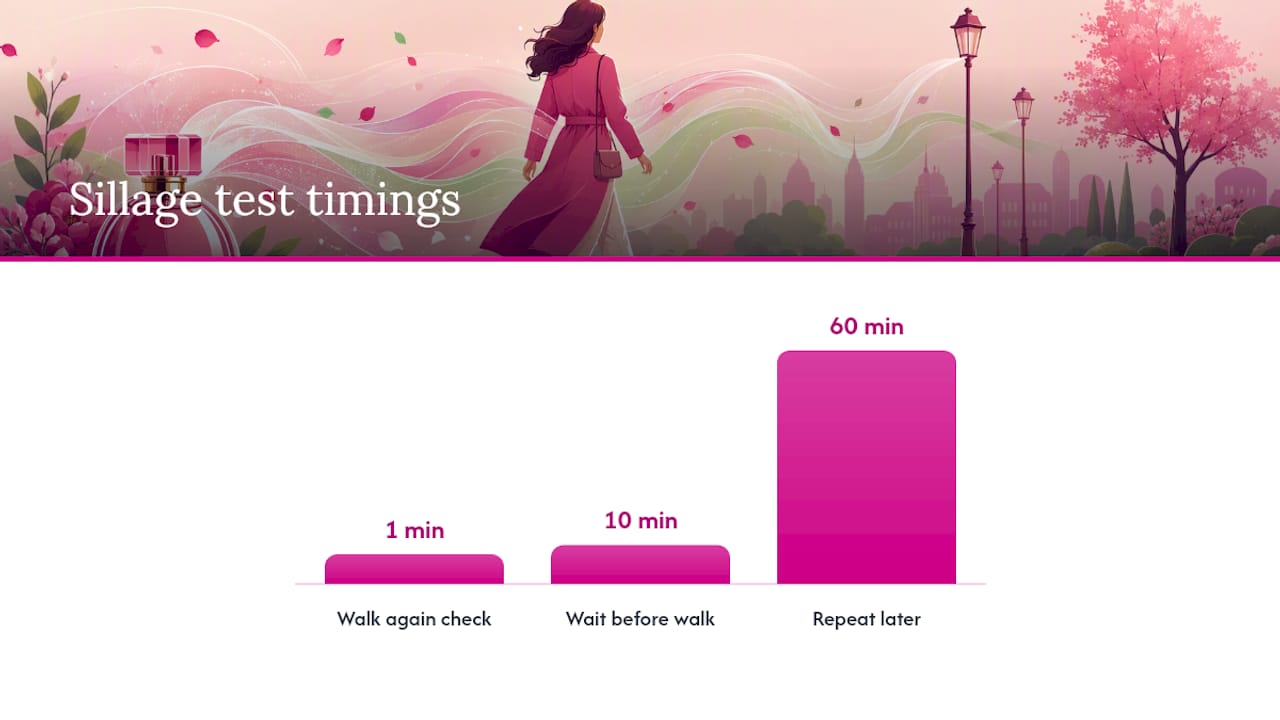
- Spray the fragrance on your wrist or a clothing edge and wait ten minutes for the top notes to settle.
- Walk through a hallway, shop aisle, or any enclosed space at a normal pace.
- Have someone walk a few paces behind you, or walk the same route again yourself a minute later, and note whether the scent is still detectable.
- Repeat the walk an hour later, since sillage can change shape as a fragrance dries down.
This is essentially the walk test that fragrance specialists rely on, and it’s the closest real-world proxy to measuring trail without instruments.
On application: spray onto pulse points and clothing hems rather than rubbing it in, which crushes the top notes. One to three sprays is plenty for most eau de parfum strengths; add more only if you’ve tested the trail and found it too shy for the room you’re heading into.
Match sillage to context. Choose something closer to the skin for a packed meeting room or a long flight. Choose something with genuine carry for an evening event where you want to be remembered as you walk in.
Rook’s approach to building sillage into a fragrance
At Rookperfumes, sillage isn’t an accident of formulation, it’s a decision made at the blending stage. As a fragrance brand working in unisex formulations, the blend balances diffusive synthetics against natural bases deliberately, aiming for a trail that reads as a signature rather than a wall of scent.
That balancing act shows up differently across the range:
- Scent of the Metaverse: Verse 1 Extrait leans on a denser, closer construction, built for someone who wants a personal scent story rather than a room-filling statement
- Misk Eau de Parfum uses patchouli and musk, ingredient families known for carrying well, giving it a more generous trail suited to entrances and evenings
Neither formula was built by accident. Concentration and note selection were chosen together, which is exactly why concentration alone never tells you the full sillage story.
When should you choose a scent that trails, and when should you hold back?
Three quick rules cover most situations. In an office or shared workspace, go quieter, you’re in close quarters with people who didn’t choose to smell your perfume. On a date or in small social settings, aim for something noticeable within arm’s reach but not overwhelming. For an evening event or entrance you want remembered, lean into a fragrance built for carry.
Whatever you choose, remember that movement and room temperature will always shift how any of it actually performs.
— Rook
Try a Rook discovery set before you commit to a full bottle
Reading about sillage only gets you so far. The real test happens on your own skin, in your own hallway, which is exactly why sampling matters more than any description on a product page. Rookperfumes built its discovery sample sets around that idea: compare how several fragrances actually trail before spending on a full bottle you haven’t lived with.
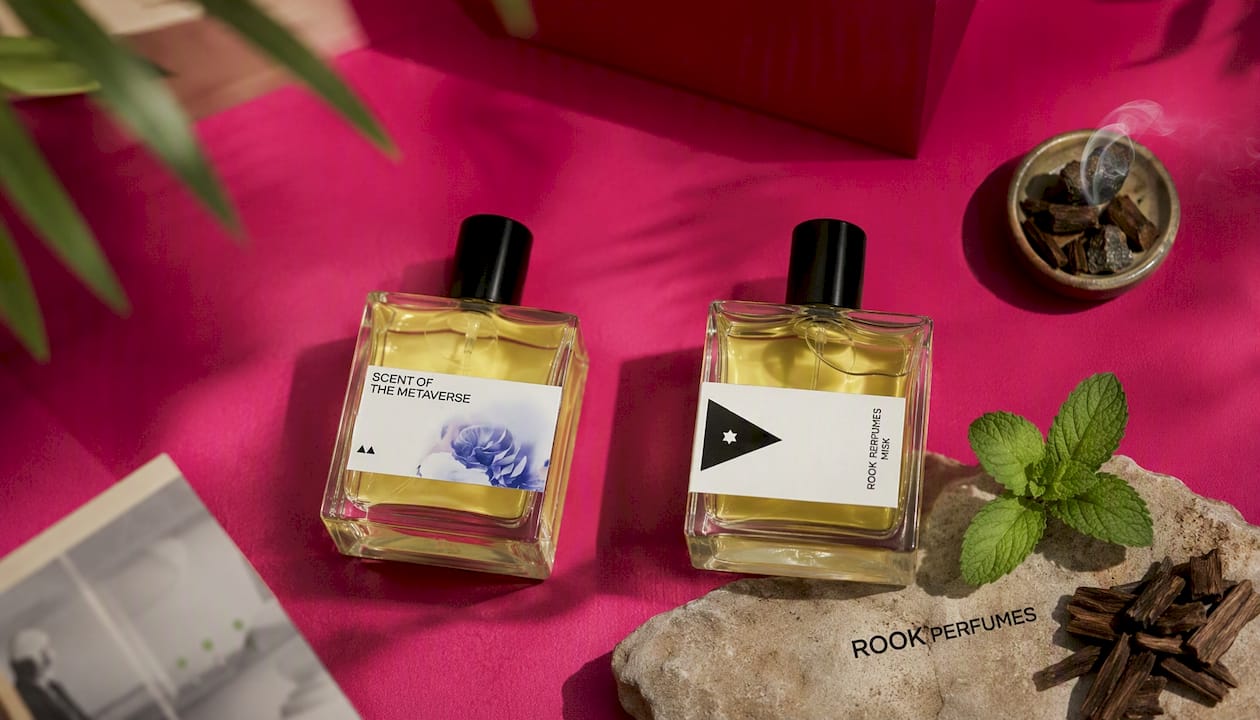
Within the range, two fragrances make a useful side-by-side test of sillage in action. Scent of the Metaverse: Verse 1 Extrait sits closer to the skin, suited to someone who wants a personal, story-driven scent rather than a room-filling one. Misk Eau de Parfum carries further, built on patchouli and musk for wearers who want to be noticed on entry. Both sit within the wider Eau de Parfum, Parfum and Extrait collection, so you can browse concentration tiers directly.
Test any sample on both clothing and skin, at different times of day, before deciding. If you’re drawn to Middle Eastern fragrance profiles, the Palestine Collection is worth exploring alongside your discovery set, and for scent that lingers in a room rather than on skin, the Room Spray and Ambient Spray range applies the same trail principles to your home.
Sources
FAQ
What does sillage mean in perfume?
Sillage refers to the scented trail a perfume leaves behind as the wearer moves through a space, rather than the scent that stays close to the skin. The word comes from the French for a boat’s wake, and it’s used across perfumery to describe that lingering trail.
What’s the difference between sillage and projection?
Projection is the scent radiating around a stationary wearer, while sillage is the trail noticed once that wearer has already left the room. The two operate independently, so a fragrance can have strong projection but weak sillage, or the reverse.
Is sillage the same as silage?
No. Silage is fermented livestock feed used in farming, an entirely unrelated agricultural term that simply sounds similar to sillage. Sillage, with two "l"s, refers only to a perfume’s trailing scent.
Does higher concentration always mean stronger sillage?
Not necessarily. An extrait can sit close to the skin while an eau de parfum built with diffusive ingredients trails much further, so the ingredients matter more than the concentration label alone.
What scent trail do people generally find appealing?
Preference varies too widely to name one universal favourite, but fragrances with a warm, diffusive base, patchouli and musk among them, tend to be noticed and remembered by people nearby. Rookperfumes’ Misk Eau de Parfum is one example built specifically around that kind of carry.
0 comments